by Editorial Team | Nov 28, 2025 | General News
The Spanish company has reinforced its commitment to safety, traceability and continuous improvement
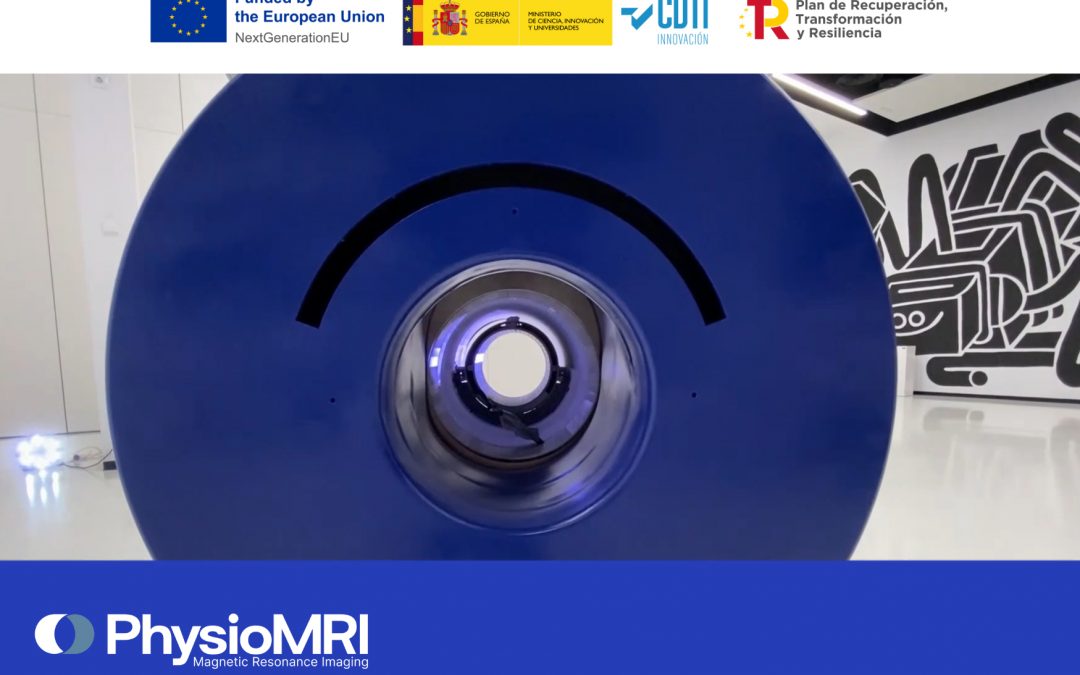
PhysioMRI, a company dedicated to the research and development of portable magnetic resonance imaging systems, has already received ISO 13485 certification, an international standard that accredits quality and safety in the design and manufacture of medical devices. This achievement represents a decisive step in consolidating the company as a technological benchmark in the advanced medical imaging sector.
The ISO 13485 standard establishes the requirements that quality management systems applied to medical devices must meet, from the initial stages of research to production, distribution, and technical support. Its purpose is to ensure that each product is developed under controlled, reproducible processes focused on patient and user safety. For PhysioMRI, this certification represents external validation of the methodological rigour with which it has been working on the development of its portable magnetic resonance imaging devices, a technology that promises to transform clinical and research environments.
The certification process has involved a comprehensive review of internal procedures, technical documentation, quality controls, component traceability and risk management mechanisms. The company has strengthened its verification and validation protocols, optimised its workflows, and adopted new control tools to ensure the reliability of each of the subsystems in its portable MRI equipment. Thanks to these improvements, PhysioMRI not only complies with international regulatory standards, but also increases the efficiency and consistency of its operations.
One of the most important aspects for PhysioMRI is that ISO 13485 does not merely validate the final product, but also requires an organizational culture focused on quality. This includes staff training, document management, supplier validation, manufacturing process control, and the implementation of clear post-marketing surveillance protocols. For a technology as sensitive as portable MRI, these criteria are essential to minimize risks and ensure reliable clinical performance.
In addition, obtaining ISO 13485 certification facilitates the entry of this new MRI into international markets. Many regulatory bodies, such as the FDA in the United States or the European Medicines Agency (EMA), consider this standard to be a prerequisite or a key element in approval dossiers. In this way, certification becomes an accelerator for technology transfer, allowing the device to reach hospitals, clinics, and research centers with the necessary guarantees.
ISO 13485 certification represents a strategic milestone for PhysioMRI. It marks the beginning of a new era in which innovation, quality and safety come together to drive the next generation of portable MRI systems.


by Editorial Team | Jul 10, 2025 | General News
The first portable magnetic resonance imaging device, developed with technology from the Valencian company and backed by prominent investors such as Claver and Rodrigo del Prado, is expected to go on sale in 2027
The Spanish company PhysioMRI, specialized in research and development of portable magnetic resonance imaging (MRI) technologies, has been officially launched with its innovative tech-medical initiative, aiming to radically transform access to and application of MRI in clinical, research, and hard-to-reach settings, such as field hospitals.
The launch event, held at the Veles e Vents building in Valencia, brought together prominent professionals from the medical, technological, and scientific fields, as well as project investors. Among the attendees were Rodrigo del Prado, founder of the Spanish tech brand BQ, Víctor Claver, former player of Valencia Basket and the Spanish National Basketball Team, and Dr. Luis Martí Bonmatí, Director of the Medical Imaging Clinical Area at the University and Polytechnic Hospital La Fe in Valencia. Four of PhysioMRI’s co-founders also took part in the event: Alfonso Ríos (CEO), José María Benlloch, Joseba Alonso, and Jonatan Fatelevich.
During his speech, Alfonso Ríos addressed several key aspects of the company, such as financial management — where audits and project verification are conducted — and the MRI manufacturing and production environment, emphasizing that “this is the place where all the reception and assembly processes take place.” He also pointed out that all the MRI machines they’ve built so far “function the same way.” Furthermore, he highlighted the Quality System division, where certifications are obtained, including the official certification required for the manufacturing of medical devices.
In his turn to speak, José María Benlloch stated: “We are looking at a technology that can bring MRI to every clinic, every hospital, every corner of the world where it is currently inaccessible. This is not an evolution — it’s a revolution in access to medical diagnostics.”
Meanwhile, Joseba Alonso offered a more detailed perspective on the development of the MRI system. He explained how this new generation of portable scanners integrates advanced ultra-low magnetic field technologies, custom acquisition electronics, and image reconstruction algorithms based on artificial intelligence. Alonso also highlighted another vital feature of PhysioMRI’s new machines: portability. “What would be needed to transport the MRI to places like a village in Africa? You’d need a trailer, anchors, stabilizers, or a ramp to lower the device and perform MRIs outside the trailer itself.”
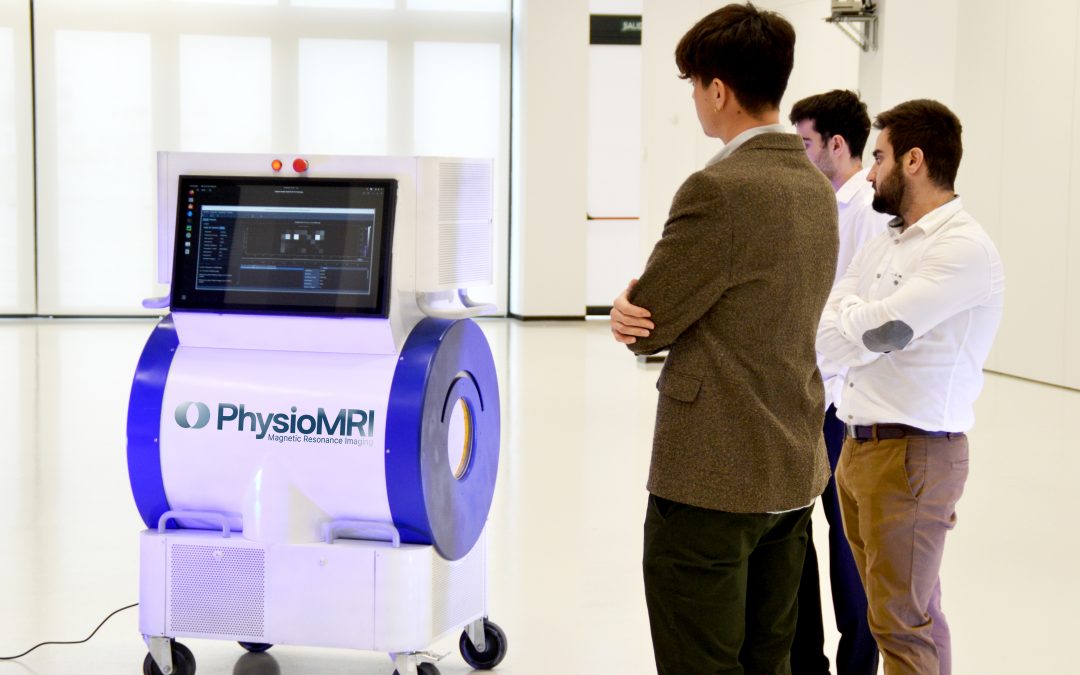
During Alonso’s presentation, a technical demonstration of the functional prototype of the medical device was carried out, sparking great interest among attendees, especially due to its compact design, intuitive interface, and ability to acquire clinically relevant images in a matter of minutes.
Lastly, Jonatan Fatelevich, who oversees the strategic and commercial side of the project, stated: “We want to place our MRI in every clinic in the world.” He also emphasized their goal to adopt a “pay-per-use” model, referring to the payment system used for photocopiers, at a much lower cost than traditional MRI scans. Based on this strategy and calculations, he noted that if a clinic performed 10 MRIs per day for 22 days a month, the investment in the medical device would be recovered in about six months.
In this way, PhysioMRI reaffirms its position as a European leader in portable MRI technologies, betting on disruptive innovation in the service of healthcare and science.

by Editorial Team | Feb 20, 2025 | General News
A milestone in quality and excellence that reaffirms the company’s commitment to innovation and continuous improvement in the healthcare sector.
PhysioMRI, a leading innovator and developer in the field of medical technology, is proud to announce that it has achieved ISO 9001:2015 certification. This achievement reaffirms the company’s commitment to quality, continuous improvement and customer satisfaction in the development of advanced medical solutions, including its portable MRI technology.
About PhysioMRI
PhysioMRI is a company dedicated to innovation in medical technologies, specialized in the development of low-field magnetic resonance imaging. The Spanish company’s medical device represents a groundbreaking innovation that redefines the way we think about MRI. The low-field device, with its compact and versatile design, makes it possible to bring high-quality diagnostic technology to patients who, for various reasons, cannot access conventional equipment. This technology has the potential to change the healthcare landscape, enabling faster and more accurate diagnoses in locations far from traditional medical centers.
What does ISO 9001:2015 certification consist of?
ISO 9001:2015 certification is an internationally recognized standard that establishes the requirements for a quality management system in organizations. The company’s achievement of this certification is an important milestone, as it accredits that all PhysioMRI processes meet the highest quality standards.
The certification process involved an exhaustive review of all aspects, such as top management commitment, internal audit or design and manufacture of the portable MRI, among others, thus ensuring that the strict quality requirements established by the ISO 9001:2015 standard were met.
PhysioMRI magnetic resonance imaging: state-of-the-art in the service of the medicine of the future
With a focus on innovation and continuous improvement, the Valencian startup seeks to make accessible the best tools for patient care, with products that optimize diagnostic and treatment processes in the medical imaging sector.


by Editorial Team | Feb 4, 2025 | General News
The Spanish manufacturer of low-field MRI machines improves image quality, reduces study times and democratizes access to advanced diagnostics.
The commercialization of PhysioMRI will facilitate access to MRI with an innovative approach, using a hybrid between Tesla’s stock model and the model of the photocopier companies of 20 years ago.
Valencia, Spain, January 2025 – PhysioMRI, a leader in medical technology innovation, takes another step into the future of healthcare with the incorporation of artificial intelligence (AI) into its revolutionary portable MRI device. This breakthrough not only redefines image quality, but also significantly reduces study times, consolidating its position as a pioneer in the industry.
MRI, traditionally associated with expensive and bulky equipment, is now within the reach of more professionals thanks to the PhysioMRI solution. Its device, unique in the world for being truly portable and 90% cheaper than current models, now adds a powerful AI layer that optimizes every stage of the diagnostic process.
Artificial Intelligence: The Key to Change
The integration of AI into the PhysioMRI system enables real-time image processing and enhancement. This ensures higher resolution, even in resource-constrained environments, facilitating more accurate and accessible diagnoses. In addition, AI minimizes artifacts and noise in the images, common problems in traditional systems, providing a clearer visualization of the internal structures of the human body.
Another revolutionary aspect is the drastic reduction of study times. Advanced algorithms optimize image acquisition, enabling results in record time. This not only improves the patient experience, but also increases the operational efficiency of clinics and hospitals, expanding their capacity for care.
Universal Access: Democratization of Magnetic Resonance Imaging
PhysioMRI technology has the potential to radically transform access to MRI. Thousands, or even hundreds of thousands, of healthcare facilities such as physiotherapy clinics, medical centers and small clinics will be able to access this advanced medical imaging technology, which until now was reserved only for large hospitals capable of investing millions of euros in these devices.
According to Jon Fatelevich, co-founder and CSO of the company:
“With PhysioMRI, this will change forever. Thanks to the drastic cost reduction and high quality we have achieved, we want to break this economic barrier by offering our machines under a pay-per-use model, similar to the photocopier model we had in Spain 20 years ago. Thus, interested entities will not have to buy them, but pay only for what they use, truly democratizing access to the best medical imaging technology in the world.”
In addition, Fatelevich noted that interested parties will be able to reserve the machines directly through the PhysioMRI website, emulating Tesla’s innovative style. This disruptive strategy opens the door for more healthcare professionals and centers to benefit from this cutting-edge technology without making large upfront investments.
Marketing: The Future Is Here
PhysioMRI is already working on commercializing this innovative technology. According to Fatelevich:
“We will start pre-sales during the first half of 2025, with the first deliveries scheduled for late 2025 and early 2026, after obtaining CE certification on which we are already well advanced.”
Global Impact: Democratization of Diagnosis
The portable PhysioMRI device not only reduces costs and improves accessibility, but also lays the groundwork for a future where artificial intelligence will be an essential tool in healthcare. This technology is specially designed to bring advanced diagnostics to locations with limited infrastructure, thus democratizing access to world-class medical tools.
With this innovation, PhysioMRI reinforces its mission to make medical technology more efficient, accessible and accurate, ushering in a new era in diagnostic imaging.
by Editorial Team | Jan 9, 2025 | General News
Portability, advanced resolution and remote connectivity: keys to portable MRI that transforms diagnosis and care in hard-to-reach environments
Today, the world of medicine and technology are increasingly intertwined, driving the creation of innovative solutions that improve diagnostic accuracy and optimize access to quality treatments. Within this scenario, PhysioMRI, a Spanish startup pioneer in research and development, has stood out with its revolutionary portable MRI technology, a tool capable of transforming the landscape of medical diagnostics globally.
Magnetic resonance imaging (MRI) has for decades been one of the most valuable tools in the diagnosis of various health conditions, such as brain injuries, musculoskeletal and cardiovascular disorders. However, its accessibility and costs have been a barrier in many parts of the world, driving the need to develop more accessible and flexible solutions. In this context, PhysioMRI has achieved a technological feat: creating a portable MRI that combines clinical accuracy with ease of use.
Innovative Features of the PhysioMRI Portable Resonance Imaging System
- Portability and Accessibility: PhysioMRI‘s portable MRI is designed to be easily transported anywhere, making it possible for diagnoses to be performed in settings outside traditional hospitals. This makes it an ideal tool for rural areas, hard-to-reach regions and medical emergencies, allowing patients to receive quality care without having to travel long distances.
- High Image Resolution: Despite its compact size, its technology does not sacrifice image quality. Its portable MRI offers a resolution similar to traditional machines, ensuring accurate and detailed diagnoses. This is essential for early disease detection, treatment planning and monitoring patient progress.
- Compact Design and Ergonomics: The device is built to be intuitive and easy to use, making it easy for technicians to operate. Its compact and ergonomic design allows it to be used in confined spaces, improving efficiency and reducing the time needed to obtain results. This factor is crucial in high-demand situations, where every second counts.
- Clinical Versatility: PhysioMRI‘s portable MRI is equipped to perform a wide range of musculoskeletal studies. With the acquisition of these images, the portable MRI technology covers a wide spectrum of diagnoses. In addition, it is compatible with different types of medical protocols, making it useful for both small clinics and larger hospitals.
- Connectivity and Remote Analysis: One of the most innovative features is its connectivity capability. Scan results can be sent securely through the cloud to medical specialists, allowing remote consultation and reducing waiting times. This is especially useful in emergency situations or when the opinion of an expert in a specialized area is required.
- Low Power Consumption: PhysioMRI has optimized the design of its MRI to consume significantly less power than traditional machines. This not only contributes to sustainability and reduced operating costs, but also allows the device to be used in areas without constant access to power sources, using rechargeable batteries and stand-alone systems.
- Research and Development Applications: In addition to its use in clinics and hospitals, portable PhysioMRI has great potential in the field of research. By enabling detailed imaging in different environments, scientists can perform studies under controlled conditions, opening new doors for biomedical research and the development of new treatments.
A Promising Future in Medicine
The Valencian startup’s portable MRI represents not only a technological breakthrough, but also an opportunity to democratize access to high-quality healthcare. With its combination of innovation, portability and high performance, this technology is setting new standards for medical care in the 21st century. The ability to make rapid and accurate diagnoses without the need for long travel or costly infrastructure has the potential to save lives, especially in resource-constrained settings.
In summary, portable PhysioMRI is one of the most disruptive proposals in the field of healthcare and technology. With its ability to deliver accurate, accessible and efficient results, it is ushering in a new era in medicine, where quality medical care is more accessible to all, regardless of geographic or economic barriers.

by Editorial Team | Dec 17, 2024 | General News
Accessibility, speed and accuracy within everyone’s reach: how portable MRI is transforming medical care and improving patient experience
In the field of medicine, technological innovation has enabled significant advances in the way various health conditions are diagnosed and treated. One of the areas in which most progress has been made is in medical imaging techniques, especially magnetic resonance imaging (MRI), which has revolutionized the diagnosis of complex pathologies, from neurological problems to musculoskeletal injuries. However, traditional MRI presents certain challenges, especially in terms of accessibility and logistics. In this context, portable MRI, such as that offered by PhysioMRI, emerges as a promising solution that not only maintains image quality, but also offers key advantages of portability and accessibility that make a fundamental difference in patient care.
A paradigm shift in magnetic resonance imaging
Conventional MRI involves the use of bulky, expensive and fixed machines, which require specialized facilities and trained personnel. In addition, due to the complexity and size of the equipment, it is not available in all clinical settings, such as private practices, rural hospitals or mobile units. This limits access to rapid and effective diagnostic tests for many patients who may not have the ability to travel to specialized centers.
This is where PhysioMRI‘s portable MRI comes in. This innovative device has been designed to provide high-quality images through equipment that is much smaller, more compact and more accessible than traditional machines. This advance not only represents an improvement in diagnostic quality, but also a reduction in the logistical and economic barriers associated with conventional MRI.
Advantages of portability in health care
1) Accessibility and availability
The main advantage of portable MRI is its ability to be brought directly to the patient, eliminating the need for the patient to travel to a specialized facility. In rural areas or regions with limited resources, the ability to offer MRI scans at the same location where the patient is seen represents a substantial improvement in access to advanced diagnostic services. In addition, portability allows examinations to be performed in mobile units, which facilitates coverage at mass events or in emergency situations, such as natural disasters or in the context of a health crisis.
2) Reduction of waiting times
The process of obtaining a traditional MRI can involve long waits due to the high demand for equipment and the need to schedule appointments. PhysioMRI‘s portable MRI significantly reduces this time, as it can be performed at the same time as the consultation, without the need to transfer the patient to another facility. This speeds up diagnosis and, therefore, the initiation of appropriate treatments.
3) Lower operating cost
The cost of maintaining and operating a conventional MRI machine can be very high, which translates into higher prices for patients. In contrast, portable machines such as PhysioMRI machines are more economical in terms of both acquisition and operation. This cost reduction makes MRI exams more accessible to a wider range of people, particularly in primary care settings or private clinics that do not have the resources to afford large, expensive equipment.
4) Flexibility and patient comfort
The ability to perform the MRI in a familiar environment, such as the physician’s office or even in the patient’s home, significantly enhances the patient experience. Patients requiring imaging tests may feel anxious or uncomfortable in a clinical setting. By eliminating the need to move to a specialized facility, portable MRI reduces the stress associated with the procedure, especially for people with reduced mobility or elderly patients.
5) Impact on sports medicine and physiotherapy
One area where portable PhysioMRI has a significant impact is in sports medicine and physiotherapy. Healthcare professionals can use this equipment to continuously track sports injuries or musculoskeletal problems without the need to send the patient to a hospital for each evaluation. In addition, the ability to perform MRI scans at the training or rehabilitation site provides clinicians with crucial information to tailor treatment plans quickly and accurately, improving outcomes and speeding recovery.
The future of magnetic resonance imaging
Portable MRI not only represents a technological improvement, but is also an example of how medicine is evolving to become more accessible, efficient and patient-centered. As technology continues to advance, it is likely that portable MRI will become even more common, contributing to a more equitable distribution of high-quality medical services around the world.
In conclusion, PhysioMRI is an important step towards more accessible and efficient medicine. Its portability not only facilitates faster and cheaper access to accurate diagnostics, but also improves patient comfort and reduces the burden on healthcare systems. This advance has the potential to transform the way we approach medical care, making advanced diagnostics a tool available to a greater number of people, regardless of their location or resources.
