by Editorial Team | Sep 11, 2026 | Blog, ELLIMRI
Este proyecto ha recibido financiación del programa «Eurostars-3 Call 4» con cofinanciación de CDTI y del Programa Marco de Investigación e Innovación «Horizonte Europa» de la Unión Europea
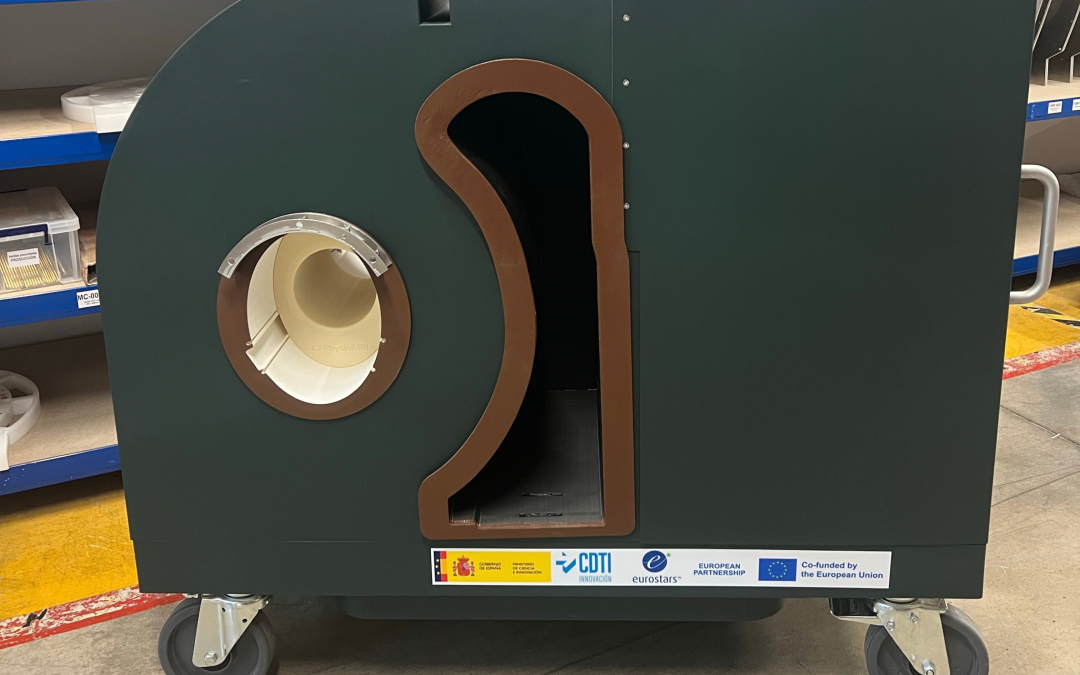
El proyecto ELLIMRI ha finalizado tras completar el desarrollo, integración y caracterización de un prototipo de resonancia magnética de campo ultra bajo, transportable y basado en una arquitectura elíptica. El proyecto ha abordado toda la cadena de desarrollo, desde la definición de requisitos y el diseño conceptual hasta la fabricación, integración, evaluación técnica y primeras pruebas de usabilidad del sistema.
El resultado final integra un imán permanente de 86,7 mT, tres ejes de gradiente, bobinas de radiofrecuencia específicas, electrónica de potencia y adquisición, sistemas de seguridad y una plataforma propia de control y reconstrucción de imagen. La geometría elíptica ha sido uno de los elementos diferenciales del desarrollo, diseñada para aprovechar mejor el espacio disponible para el paciente y, al mismo tiempo, mantener un sistema compacto y transportable.
Durante el proyecto se caracterizaron el campo magnético, los gradientes, el sistema de radiofrecuencia, la estabilidad térmica y el comportamiento frente al ruido electromagnético. También se realizaron ensayos relacionados con la calidad de imagen, incluyendo relación señal-ruido, distorsión geométrica y artefactos. Entre las prestaciones finales obtenidas destacan un campo principal de 86,70 mT, una homogeneidad caracterizada de 5.000 ppm y un rango operativo de 16 a 30 °C.
El prototipo demostró además capacidad para generar imágenes de phantoms, anatomía musculoesquelética y adquisiciones exploratorias de cabeza. Estas pruebas confirmaron la viabilidad funcional de la arquitectura y permitieron identificar aspectos que podrán seguir optimizándose en futuras fases.
Una vez alcanzada la configuración, se realizó también una evaluación preclínica de usabilidad basada en tareas representativas del uso previsto. Los participantes completaron satisfactoriamente las cinco operaciones evaluadas, alcanzando una tasa de éxito del 100 %.
Con la finalización de ELLIMRI, el proyecto ha evolucionado desde una especificación inicial y un conjunto de tecnologías independientes hasta un sistema integrado, funcional y caracterizado experimentalmente. El resultado constituye una base sólida para las siguientes etapas de optimización, industrialización y evaluación clínica, y demuestra la viabilidad de desarrollar sistemas de resonancia magnética más compactos y accesibles mediante arquitecturas específicamente diseñadas para campo ultra bajo.
Subvencionado por el CDTI


by Editorial Team | Aug 25, 2026 | Blog
Incorporar equipamiento de diagnóstico por imagen en una clínica es una decisión importante. No debe analizarse solo por el coste del equipo, sino por el impacto que puede tener en la actividad diaria del centro, la experiencia del paciente y la rentabilidad del servicio.
Para propietarios o directores médicos, la clave está en responder a una pregunta sencilla: ¿cuántas pruebas se derivan hoy fuera de la clínica y qué valor podría retenerse si parte de esa actividad se realizara dentro del propio centro?
Analizar las derivaciones actuales
El primer paso es revisar cuántos pacientes se derivan cada mes a otros centros para realizar pruebas de imagen.
PhysioMRI permite, a través de una herramienta calculadora, estimar la demanda real y valorar si existe volumen suficiente para incorporar una solución propia. También ayuda a identificar costes menos visibles, como retrasos en el diagnóstico, segundas citas, pérdida de continuidad o pacientes que no regresan después de la derivación.
Evaluar el perfil de pacientes
No todas las clínicas necesitan la misma tecnología. Un centro de traumatología o fisioterapia debe analizar qué tipo de lesiones atiende con más frecuencia.
Si buena parte de la actividad se concentra en rodilla, tobillo, pie, mano, muñeca o codo, puede tener sentido estudiar una resonancia magnética orientada a extremidades, como PhysioMRI.
Este modelo permite adaptar a la clínica un dispositivo de alta tecnología sin inversión inicial, en lugar de incorporar una tecnología sobredimensionada para sus necesidades.
Revisar espacio e infraestructura
Antes de incorporar cualquier equipo de diagnóstico por imagen, conviene valorar el espacio disponible, los requisitos eléctricos, las condiciones ambientales y las posibles adaptaciones necesarias.
En este punto, las soluciones compactas y portátiles pueden facilitar la integración en clínicas donde una resonancia convencional sería difícil de instalar por coste, tamaño o infraestructura.
PhysioMRI está diseñada precisamente para acercar la resonancia magnética a nuevos entornos clínicos, reduciendo algunas de las barreras habituales de instalación.
Valorar un modelo pay-per-use
El modelo pay-per-use de nuestra empresa permite incorporar una resonancia magnética sin una inversión inicial. En lugar de asumir el coste completo de adquisición del equipo, la clínica paga en función del uso real.
Esto cambia la forma de analizar la inversión. El centro puede calcular cuántas exploraciones prevé realizar al mes, cuál sería el coste por uso y qué margen generaría cada estudio.
Así, el volumen actual de derivaciones se convierte en una variable clave. Cuantos más pacientes puedan mantenerse dentro del propio circuito asistencial, mayor será el potencial de aprovechamiento del equipo.
Calcular el retorno con datos propios
La viabilidad debe calcularse con los números reales de cada clínica: derivaciones mensuales, exploraciones potenciales, ingreso medio por prueba, coste por uso y margen previsto.
Pero el retorno no depende solo del ingreso directo por cada resonancia. También hay que considerar el valor de reducir derivaciones externas, acortar el tiempo hasta el diagnóstico, mejorar la coordinación entre profesionales y mantener al paciente dentro del centro.
El modelo pay-per-use de PhysioMRI te da todas estas ventajas. Una forma más flexible de acceder al diagnóstico por imagen, adaptando el coste a la actividad real del centro.
Calculadora para calcular el coste de la derivación de RM:
by Eva García | Aug 14, 2026 | Blog
El coste real de derivar: cuánto pierde al año una clínica por no tener resonancia propia
Para el propietario o director médico de una clínica, derivar pacientes para una resonancia magnética puede parecer parte normal del proceso asistencial. Sin embargo, cada prueba que sale del centro también puede suponer una pérdida económica, operativa y de continuidad con el paciente.
El coste no está solo en la prueba que no se factura. También está en el ingreso que deja de capturarse, en los pacientes que no vuelven, en los tratamientos que se retrasan y en la pérdida de control sobre el recorrido clínico.
El margen que se queda fuera de la clínica
Cada resonancia derivada es una oportunidad que otro centro aprovecha.
Si una exploración puede generar entre 120 y 180 euros de ingreso potencial, una clínica que deriva 20 estudios al mes está dejando escapar entre 28.800 y 43.200 euros al año.
Con 40 derivaciones mensuales, la cifra puede situarse entre 57.600 y 86.400 euros anuales.
No se trata únicamente de facturación. También se pierde la posibilidad de integrar la resonancia dentro del propio circuito clínico: consulta, imagen, diagnóstico, tratamiento y seguimiento.
¿Quieres saber cuanto estás perdiendo? Prueba nuestra CALCULADORA
El riesgo de que el paciente no vuelva
Cuando el paciente debe acudir a otro centro para hacerse la resonancia, la clínica pierde parte del control sobre su experiencia.
Durante ese proceso, el paciente puede entrar en contacto con otros profesionales, recibir nuevas recomendaciones o retrasar su vuelta. En algunos casos, simplemente no regresa.
Para clínicas que combinan traumatología, fisioterapia, rehabilitación o seguimiento de lesiones, esta fuga puede tener un impacto importante. No solo se pierde una prueba de imagen, sino también consultas, sesiones y tratamientos posteriores.
Un proceso más lento y fragmentado
El circuito habitual suele ser largo: primera consulta, sospecha clínica, derivación externa, cita para la resonancia, espera del informe y nueva visita.
Cada paso añade tiempo, coordinación y posibles abandonos. Para el equipo clínico, significa tomar decisiones más tarde. Para el paciente, supone más incertidumbre y una experiencia menos fluida.
Disponer de RM propia permite reducir esta fricción y mantener el recorrido asistencial dentro del centro, con más control sobre los tiempos y la continuidad del tratamiento.
Cómo calcular el coste real de derivar
El cálculo puede hacerse con datos sencillos de la propia clínica.
Durante tres meses, conviene registrar:
- Cuántas resonancias se derivan al mes.
- Qué ingreso medio podría obtenerse por estudio.
- Qué porcentaje de pacientes no vuelve después de la derivación.
- Qué ingresos posteriores se pierden: revisiones, sesiones de fisioterapia, rehabilitación o tratamientos complementarios.
Una fórmula sencilla sería:
Derivaciones anuales × ingreso medio por prueba + pacientes perdidos × valor medio del tratamiento posterior
A ese resultado habría que restarle los costes asociados a disponer del servicio dentro de la clínica.
Medir antes de decidir
El objetivo no es asumir que toda clínica necesita una resonancia propia. La clave está en medirlo con números reales.
Cuando el volumen de derivaciones es estable, el coste de no actuar puede ser mayor que el coste de incorporar la tecnología.
Para muchas clínicas, la pregunta ya no es solo cuánto cuesta tener una RM propia, sino cuánto valor se pierde cada año al enviar fuera pacientes, pruebas y oportunidades de tratamiento.
Calculadora para calcular el coste de la derivación de RM:
by Editorial Team | Jul 29, 2026 | Blog, General News
For a clinic combining physiotherapy and orthopaedics, referring a patient elsewhere for a magnetic resonance imaging scan is not merely an administrative step. It interrupts the patient care pathway, creates dependence on another centre and reduces the clinic’s control over the patient experience.
The process is usually familiar: consultation, suspected diagnosis, external referral, waiting period, report and a follow-up appointment. During this time, treatment may be delayed and the patient may lose continuity of care within the clinic.
Having an in-house MRI system helps reduce this friction. The orthopaedic specialist can request the scan within the clinic itself, while the physiotherapy team can plan treatment with more information from the outset.
The advantage lies not only in performing the scan sooner, but also in connecting assessment, diagnostic imaging, clinical decision-making and follow-up within a single care pathway.
A pay-per-use model linked to actual activity
The pay-per-use model changes the way diagnostic technology can be incorporated into a clinic. Instead of taking on a high initial investment, the centre pays according to the number of scans performed.
This makes it possible to link the cost of the service directly to the activity generated. Each scan can be assessed easily in terms of revenue per examination, cost per use and resulting margin.
In addition, the clinic retains an activity that was previously referred to another centre and strengthens other associated services, such as orthopaedic consultations, rehabilitation programmes and follow-up appointments.
The return does not depend solely on the margin generated by each scan. It also includes reducing missed opportunities, maintaining continuity of care within the centre and turning an initial consultation into a more comprehensive treatment plan.
A visible difference compared with other centres
In a market where many clinics offer similar services, having an in-house MRI system can become a clear differentiating factor.
For patients, it means fewer journeys and shorter waiting times. For healthcare professionals, it provides more information on which to base their decisions. For the clinic, it represents a new area of activity and greater control over the patient care pathway.
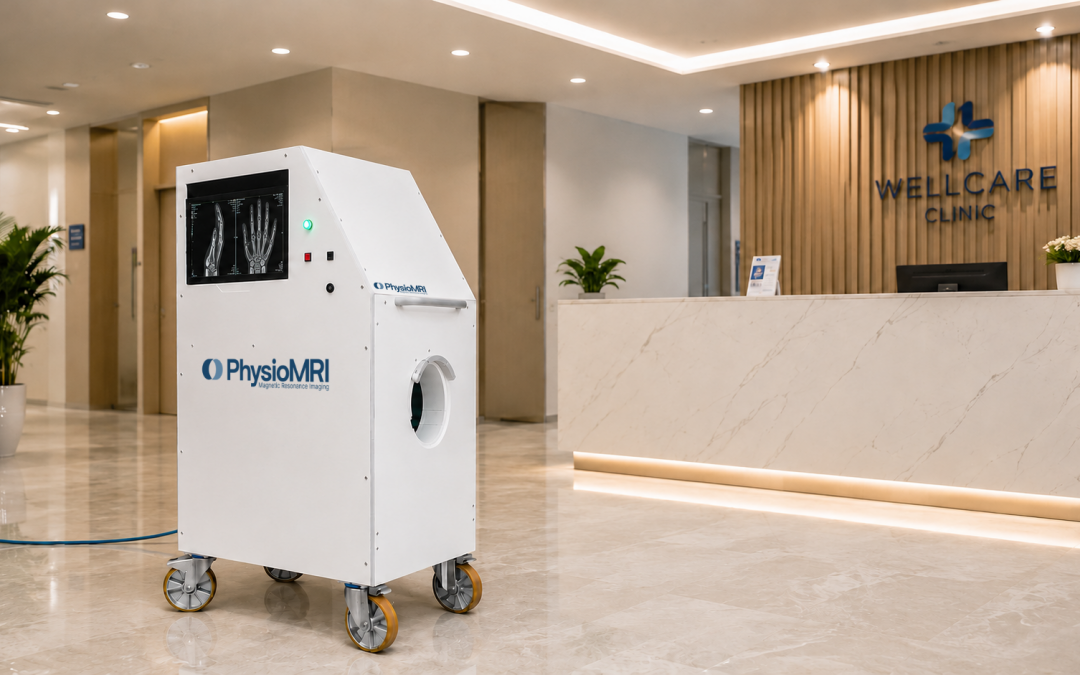
PhysioMRI brings magnetic resonance imaging closer to physiotherapy and orthopaedic clinics through a flexible model designed to facilitate access to musculoskeletal imaging within the clinic itself.
Discover how to integrate PhysioMRI into your clinic
If your clinic still refers patients elsewhere for MRI scans, it may be time to consider a more streamlined alternative.
Discover how to integrate PhysioMRI into your clinic through a pay-per-use model and request further information through our pre-sale landing page.
by Editorial Team | May 15, 2026 | Blog, General News, NextMRI
On May 14, 2026, we attended the GSIC Sport Business Networking Valencia, an event organized by GSIC powered by Microsoft that brought together startups, companies, institutions, and stakeholders from the sports business and sports tech sectors.
The event took place from 6:00 p.m. to 7:30 p.m. at TUOI, Miobio’s new space located in the Innsomnia Building in Valencia.
An event to bring together sports and innovation
GSIC Sport Business Networking Valencia is designed to foster strategic connections, share ideas, and explore new opportunities in the sports industry.
For PhysioMRI, participating in this event provided an opportunity to present our vision of the role that the NextMRI project’s portable MRI scanner can play in areas such as healthcare, performance, prevention, and the monitoring of sports injuries.
PhysioMRI’s Participation in the Pitch Session
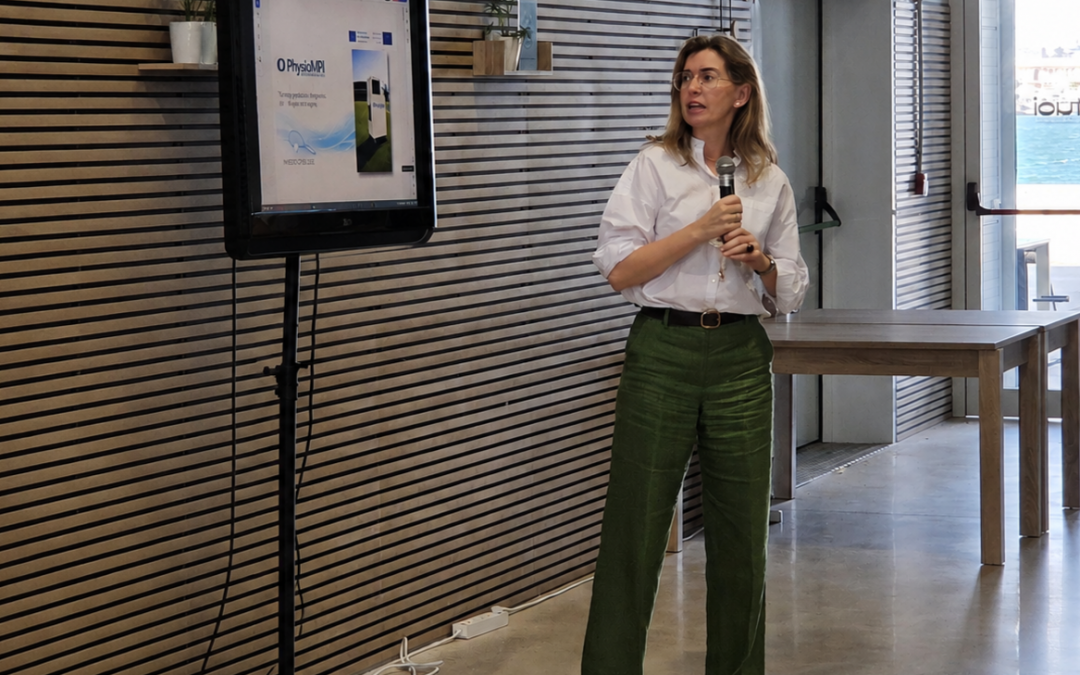
During the session, GSIC members gave a series of presentations. Representing PhysioMRI was Lourdes Martínez, Director of International Expansion, who noted that “it is an easy-to-use device that can be taken to the venue where a sporting event is taking place.” She also highlighted that tests can be performed on-site and provide high-quality images in five minutes, and mentioned the MRI scan performed on a rider during the 2022 MotoGP Valencia Grand Prix, which yielded favorable results.
Later, during the Q&A session, José María Benlloch, co-founder of PhysioMRI, also participated. He mentioned that “the disruption lies not only in portability, but above all in accessibility for all the small clinics that would love to have it.” He also highlighted the importance of demonstrating the ability to diagnose “injury by injury,” noting that for the vast majority of applications, a diagnosis can be obtained.
The agenda also included welcoming remarks by Juan Fuentes, director of the GSIC Testing Lab, and Sergio Brisa, co-founder and CEO of Miobio, as well as a final networking session.
Portable MRI and Sports
At PhysioMRI, we are working to bring advanced medical imaging to new settings. In the sports sector, portable MRI can open up opportunities in functional assessment, injury monitoring, recovery, and collaboration among healthcare professionals, athletes, clubs, and institutions.
Through this partnership, we continue to explore new applications for our technology and reinforce our commitment to medical innovation in sports.

by Editorial Team | Apr 24, 2026 | Blog, General News
At PhysioMRI, we have joined the Global Sports Innovation Center (GSIC) powered by Microsoft, as partners. This international network connects technology companies, startups, sports organizations, and institutions to drive innovation in sports.
This partnership allows us to become part of an ecosystem specializing in SportsTech, health, performance, and applied innovation, where we aim to contribute our expertise in the development of portable MRI systems.
Medical innovation applied to sports
At PhysioMRI, we are working to bring advanced medical imaging to more flexible and accessible settings. In the sports field, portable MRI can open up new possibilities for injury monitoring, functional assessment, and recovery.
Connection to the Valencia Testing Lab
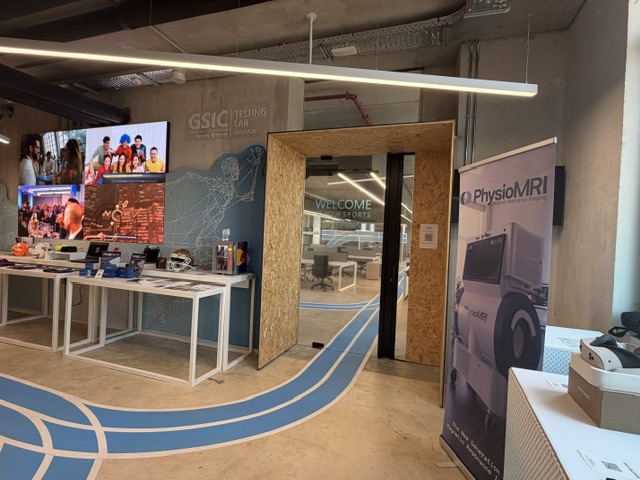
Our membership in the GSIC also connects us to the Valencia Testing Lab, located at La Harinera. This space is dedicated to testing, validation, and collaboration between technology companies and stakeholders in the sports ecosystem.
For PhysioMRI, this represents an opportunity to share knowledge, explore new use cases, and develop solutions tailored to the real needs of sports and healthcare.
A new milestone for PhysioMRI
With this addition, we are strengthening our commitment to collaboration, applied research, and technology transfer.
At PhysioMRI, we continue to work toward bringing portable MRI technology to new applications in sports, healthcare, and medical innovation.
by Editorial Team | Apr 1, 2026 | Blog, General News
Spanish portable MRI company begins global validation with tech giant as first customer
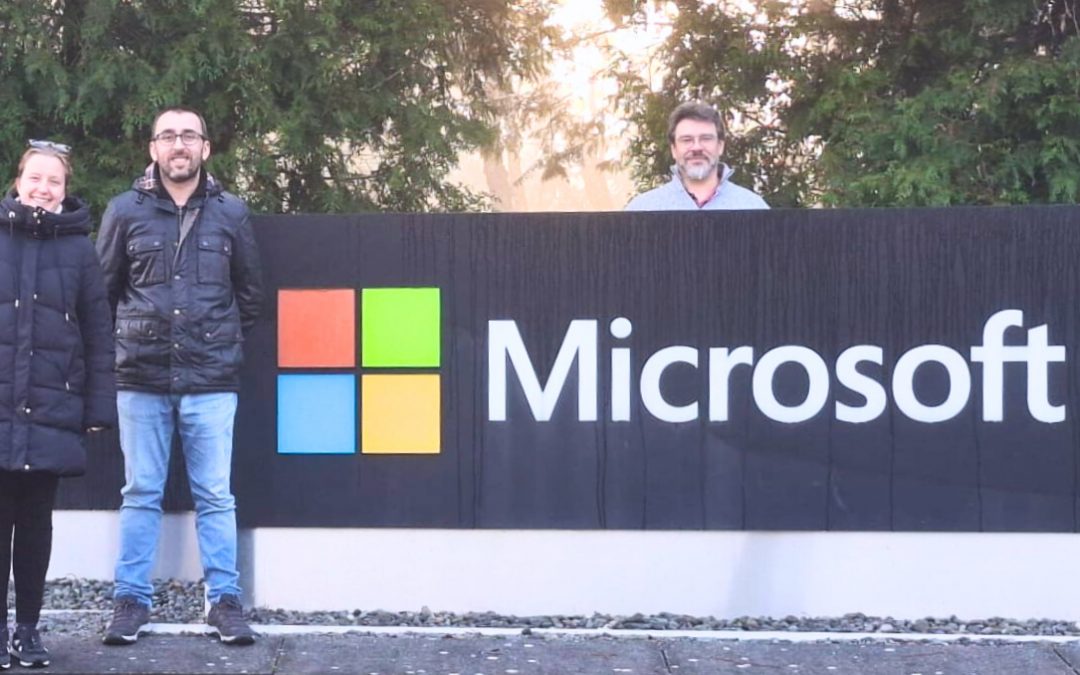
The Spanish company PhysioMRI has taken a major strategic step forward by establishing contact with Microsoft as the first customer for its portable magnetic resonance imaging technology. This move not only strengthens the company’s position in the international technology ecosystem, but also validates its value proposition in a highly competitive and demanding environment.
PhysioMRI, which specializes in developing low-field, high-efficiency MRI solutions, has opted for a disruptive model as opposed to traditional high-field systems, which are characterized by high installation and maintenance costs and structural requirements. Its portable technology eliminates the need for complex shielded infrastructure, reduces energy consumption, and allows for flexible deployment in non-hospital settings.
In strategic terms, the approach to Microsoft represents much more than an initial commercial opportunity. It represents an early validation case with a global player that operates under extremely rigorous standards in security and technological interoperability. For a medtech startup, gaining the attention of a corporation with Microsoft’s capabilities means overcoming high-level technical and regulatory.
From a reputational standpoint, this contact positions PhysioMRI as an innovative player capable of engaging in technical dialogue on equal terms with large multinational technology companies. In the early stages of business growth, milestones such as this often act as a catalyst for future rounds of financing, industrial alliances, and international expansion. The signaling effect on potential investors and partners is significant.
Furthermore, the choice of Microsoft as the first customer demonstrates a clear strategy: prioritizing agreements with organizations that can amplify the product’s impact beyond conventional clinical use. The potential applications of portable resonance in corporate environments, applied research, or even occupational medicine represent emerging niches with high scalability potential.
In short, this milestone marks a turning point in the company’s history. Beyond the immediate commercial dimension, it symbolizes the transition from a phase of technological development to a stage of international validation and global projection. This solidifies PhysioMRI as one of Europe’s leading companies in portable MRI, demonstrating that disruptive innovation in medical technology can emerge from the Spanish ecosystem with a global reach.
by Editorial Team | Mar 20, 2026 | Blog, NextMRI
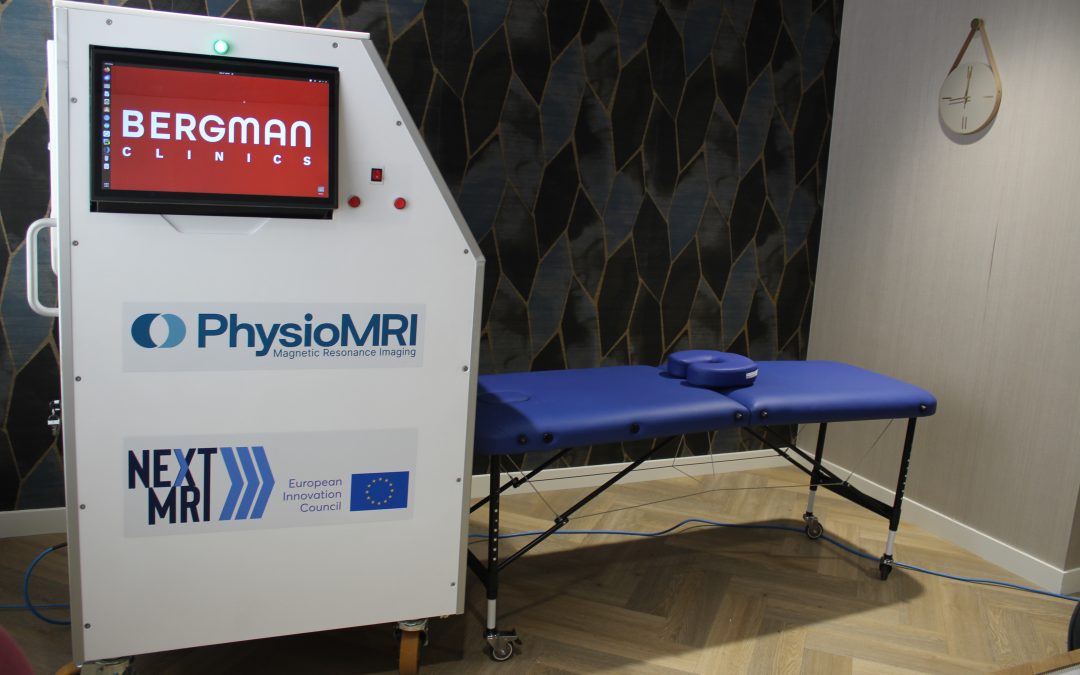
The clinical trials conducted by PhysioMRI at Bergman Clinics in the Dutch city of Breda form part of the current phase of the NextMRI project. As part of this, the company has transported a portable MRI scanner with a magnetic field strength of less than 0.1T from Valencia to continue gathering clinical data and assessing the potential of this technology in real-world conditions.
The equipment was transported by road on Monday 23 February and arrived in Breda the following evening. By Wednesday morning, the system was already in place at Bergman Clinics, and less than an hour after its arrival, it was fully operational and capturing its first images.
Rapid deployment in a real-world clinical setting
The roll-out of the system at Bergman Clinics highlights one of the operational advantages of this type of solution: its ability to be transported, installed and activated within a short timeframe.
After downloading the software and carrying out the necessary checks, the scanner was up and running in just 50 minutes. This speed is particularly important in the development of new imaging solutions designed to expand the potential applications of magnetic resonance imaging in a variety of settings.
Knee studies and comparison with 1.5-Tesla systems
Over the coming months, the system will remain at Bergman Clinics as part of the work planned under the NextMRI project. During this period, more than 100 patients will undergo MRI scans of the knee using this portable low-field scanner.
In addition, the same patients will also be examined using a 1.5-tesla (1.5T) system. This comparison will enable us to continue improving the images obtained using low-field MRI by comparing them with data from higher-field systems.
Generation of clinical data within the NextMRI project
At the same time, a similar system is in place at La Fe Hospital in Valencia, where comparable trials are being conducted to gather further clinical data, in this case in the field of neuroimaging.
Collaboration between the two fields will enable the creation of a database of paired images, a key resource for analysing which types of conditions can be detected using low-field MRI systems and for continuing to assess their potential in future applications.
PhysioMRI continues to make progress in the development of new imaging solutions
Through its participation in NextMRI, PhysioMRI continues to drive the development of new portable MRI solutions and to strengthen its focus on technological innovation, real-world validation and improving access to medical imaging.
The collaboration with centres such as Bergman Clinics and La Fe Hospital represents a significant step in this process and enables us to continue building up a body of technical and clinical knowledge regarding low-field magnetic resonance imaging.
by Editorial Team | Mar 10, 2026 | Blog, NextMRI
The Health Research Institute in Valencia is hosting the trials for the NextMRI project
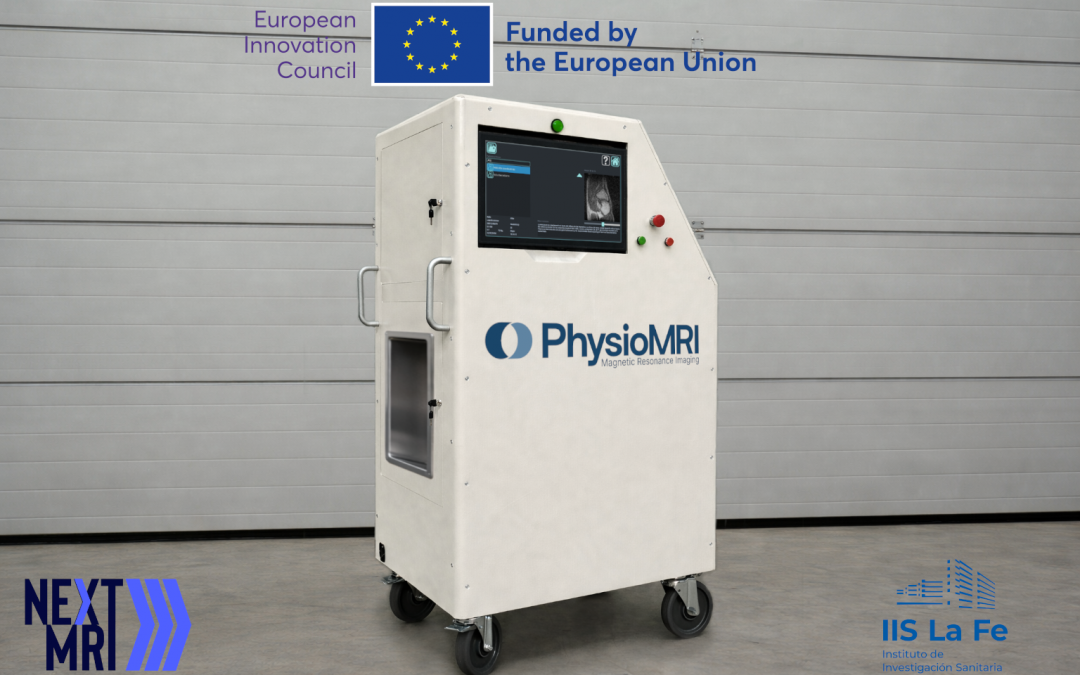
The Health Research Institute Hospital La Fe (IIS La Fe) in Valencia is one of the centres where PhysioMRI is developing and evaluating new portable MRI solutions as part of the NextMRI project. This phase of the work forms part of the process of validating the system in a real clinical setting and enables further progress to be made in refining the technology.
Through these trials, PhysioMRI continues to work on developing more compact, accessible and easy-to-deploy systems, with the aim of expanding the potential applications of magnetic resonance imaging in new settings.
Neurological tests to further validate the system
PhysioMRI is working with healthcare professionals in the fields of neurology and imaging at IIS La Fe to assess how the device performs in real-world conditions in patients with multiple sclerosis.
This activity makes it possible to assess both the quality of the brain images obtained and the acquisition protocols used, as well as the system’s adaptability and operational effectiveness in a hospital setting.
The involvement of this world-leading hospital also provides a particularly valuable context, given its research expertise and its involvement in technological innovation projects in the healthcare sector.
Usability and the development of more accessible solutions
In turn, these trials enable PhysioMRI to continue developing solutions which, as well as providing high-quality images, are intuitive and practical for healthcare staff.
Validation in health research Institutes such as La Fe represents a significant step towards further improving the technology and strengthening a development strategy focused on the accessibility, portability and practical utility of magnetic resonance imaging.
NextMRI as a framework for development and innovation
The activities carried out at La Fe form part of the NextMRI project, in which various partners with complementary expertise are working together to develop new MRI solutions. In this context, PhysioMRI plays a key role as the system’s developer and manufacturer, driving its evolution through work in real-world settings and collaboration with leading healthcare centres.
This type of trial helps to further consolidate the technical and clinical foundation that is essential for the development of new applications and for the continuous improvement of the technology.
by Editorial Team | Feb 20, 2026 | General News
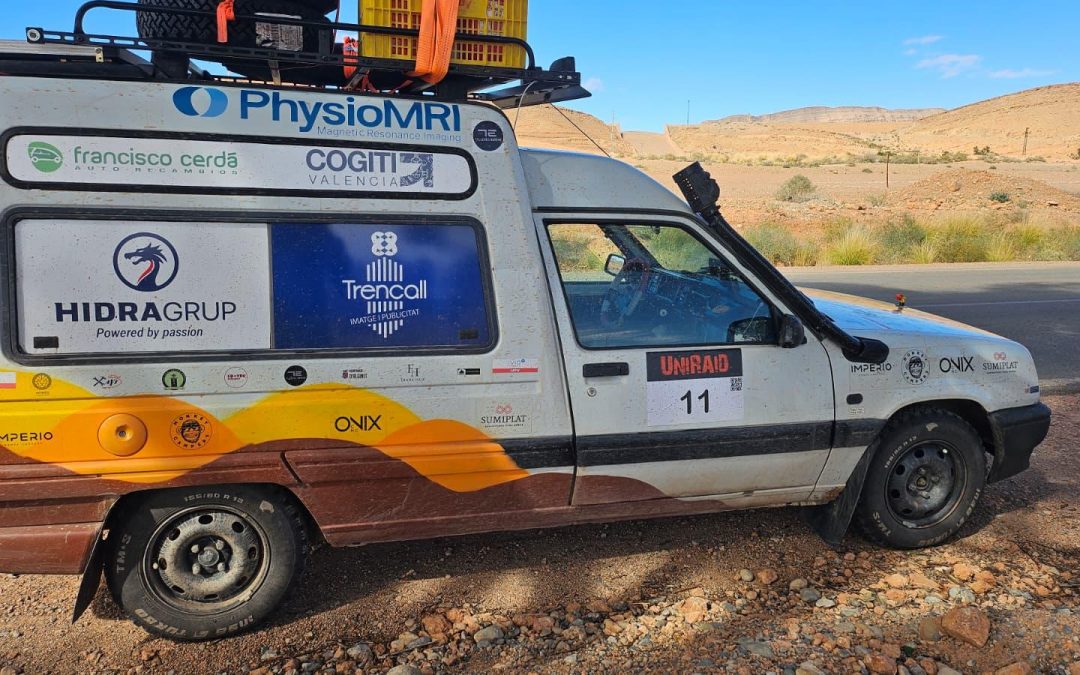
On February 14th, the “Plátano Faller Rally Team” concluded its participation in Uniraid 2026, after completing more than 2,000 kilometers across Morocco in nine days. They traveled in a Renault Express van over 15 years old, without GPS or electronic devices, navigating solely by roadbook, map, and compass.
The team, comprised of Rubén Bosch and Pablo García, engineers and researchers at the Spanish National Research Council (CSIC), where they work on the development of portable, low-cost MRI scanners designed to democratize access to advanced medical technology, successfully completed all stages and delivered 40 kg of aid, including school, sports, and medical supplies, directly to rural communities in southern Morocco.
“For us, this experience is a challenge that unites the technical with the human. We want to demonstrate that with ingenuity, effort, and collaboration, we can make a difference,” the Plátano Faller Rally Team emphasizes.
At Physio MRI, we have supported this initiative, which embodies values we share: technical rigor, adaptability in demanding environments, and genuine social commitment. It also aims to bring high-quality diagnostic imaging to contexts where conventional MRI is not feasible, whether due to a lack of infrastructure, energy limitations, or adverse environmental conditions.
We are proud to have been part of this project that has combined innovation and solidarity.
