by Editorial Team | May 15, 2026 | Blog, General News, NextMRI
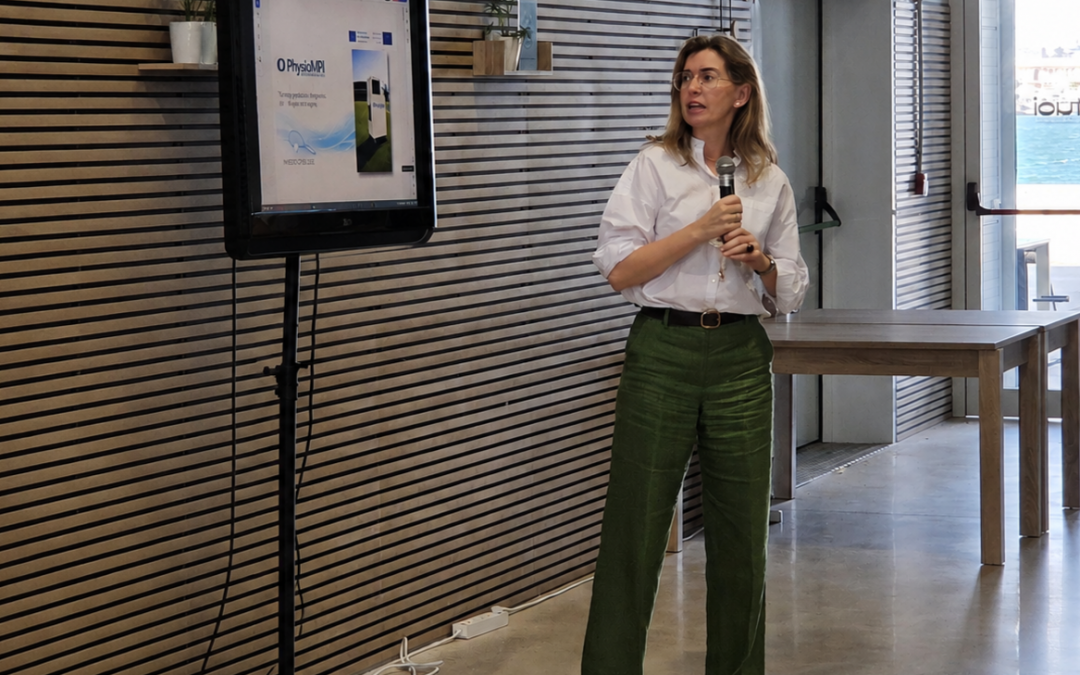
On May 14, 2026, we attended the GSIC Sport Business Networking Valencia, an event organized by GSIC powered by Microsoft that brought together startups, companies, institutions, and stakeholders from the sports business and sports tech sectors.
The event took place from 6:00 p.m. to 7:30 p.m. at TUOI, Miobio’s new space located in the Innsomnia Building in Valencia.
An event to bring together sports and innovation
GSIC Sport Business Networking Valencia is designed to foster strategic connections, share ideas, and explore new opportunities in the sports industry.
For PhysioMRI, participating in this event provided an opportunity to present our vision of the role that the NextMRI project’s portable MRI scanner can play in areas such as healthcare, performance, prevention, and the monitoring of sports injuries.
PhysioMRI’s Participation in the Pitch Session
During the session, GSIC members gave a series of presentations. Representing PhysioMRI was Lourdes Martínez, Director of International Expansion, who noted that “it is an easy-to-use device that can be taken to the venue where a sporting event is taking place.” She also highlighted that tests can be performed on-site and provide high-quality images in five minutes, and mentioned the MRI scan performed on a rider during the 2022 MotoGP Valencia Grand Prix, which yielded favorable results.
Later, during the Q&A session, José María Benlloch, co-founder of PhysioMRI, also participated. He mentioned that “the disruption lies not only in portability, but above all in accessibility for all the small clinics that would love to have it.” He also highlighted the importance of demonstrating the ability to diagnose “injury by injury,” noting that for the vast majority of applications, a diagnosis can be obtained.
The agenda also included welcoming remarks by Juan Fuentes, director of the GSIC Testing Lab, and Sergio Brisa, co-founder and CEO of Miobio, as well as a final networking session.
Portable MRI and Sports
At PhysioMRI, we are working to bring advanced medical imaging to new settings. In the sports sector, portable MRI can open up opportunities in functional assessment, injury monitoring, recovery, and collaboration among healthcare professionals, athletes, clubs, and institutions.
Through this partnership, we continue to explore new applications for our technology and reinforce our commitment to medical innovation in sports.

by Editorial Team | Mar 20, 2026 | Blog, NextMRI
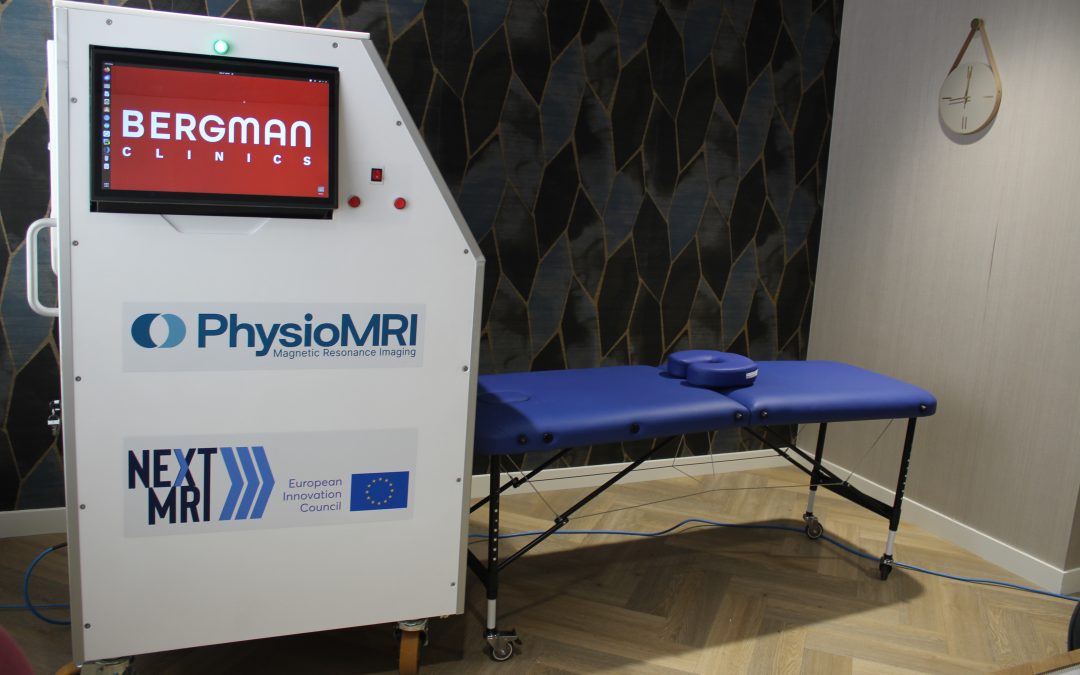
The clinical trials conducted by PhysioMRI at Bergman Clinics in the Dutch city of Breda form part of the current phase of the NextMRI project. As part of this, the company has transported a portable MRI scanner with a magnetic field strength of less than 0.1T from Valencia to continue gathering clinical data and assessing the potential of this technology in real-world conditions.
The equipment was transported by road on Monday 23 February and arrived in Breda the following evening. By Wednesday morning, the system was already in place at Bergman Clinics, and less than an hour after its arrival, it was fully operational and capturing its first images.
Rapid deployment in a real-world clinical setting
The roll-out of the system at Bergman Clinics highlights one of the operational advantages of this type of solution: its ability to be transported, installed and activated within a short timeframe.
After downloading the software and carrying out the necessary checks, the scanner was up and running in just 50 minutes. This speed is particularly important in the development of new imaging solutions designed to expand the potential applications of magnetic resonance imaging in a variety of settings.
Knee studies and comparison with 1.5-Tesla systems
Over the coming months, the system will remain at Bergman Clinics as part of the work planned under the NextMRI project. During this period, more than 100 patients will undergo MRI scans of the knee using this portable low-field scanner.
In addition, the same patients will also be examined using a 1.5-tesla (1.5T) system. This comparison will enable us to continue improving the images obtained using low-field MRI by comparing them with data from higher-field systems.
Generation of clinical data within the NextMRI project
At the same time, a similar system is in place at La Fe Hospital in Valencia, where comparable trials are being conducted to gather further clinical data, in this case in the field of neuroimaging.
Collaboration between the two fields will enable the creation of a database of paired images, a key resource for analysing which types of conditions can be detected using low-field MRI systems and for continuing to assess their potential in future applications.
PhysioMRI continues to make progress in the development of new imaging solutions
Through its participation in NextMRI, PhysioMRI continues to drive the development of new portable MRI solutions and to strengthen its focus on technological innovation, real-world validation and improving access to medical imaging.
The collaboration with centres such as Bergman Clinics and La Fe Hospital represents a significant step in this process and enables us to continue building up a body of technical and clinical knowledge regarding low-field magnetic resonance imaging.
by Editorial Team | Mar 10, 2026 | Blog, NextMRI
The Health Research Institute in Valencia is hosting the trials for the NextMRI project
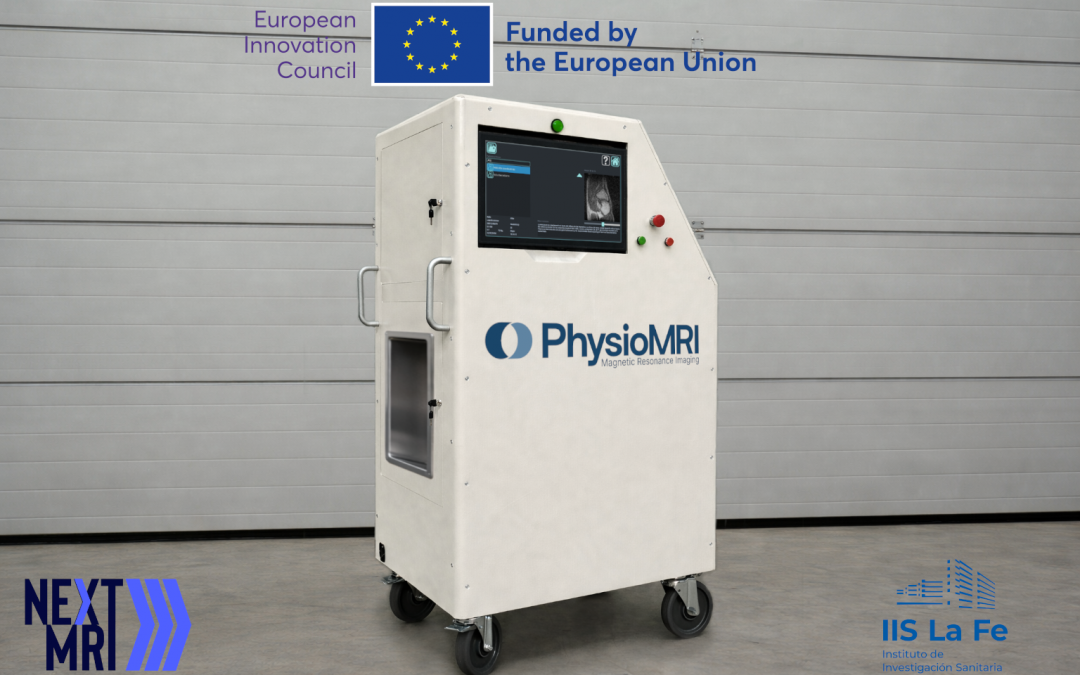
The Health Research Institute Hospital La Fe (IIS La Fe) in Valencia is one of the centres where PhysioMRI is developing and evaluating new portable MRI solutions as part of the NextMRI project. This phase of the work forms part of the process of validating the system in a real clinical setting and enables further progress to be made in refining the technology.
Through these trials, PhysioMRI continues to work on developing more compact, accessible and easy-to-deploy systems, with the aim of expanding the potential applications of magnetic resonance imaging in new settings.
Neurological tests to further validate the system
PhysioMRI is working with healthcare professionals in the fields of neurology and imaging at IIS La Fe to assess how the device performs in real-world conditions in patients with multiple sclerosis.
This activity makes it possible to assess both the quality of the brain images obtained and the acquisition protocols used, as well as the system’s adaptability and operational effectiveness in a hospital setting.
The involvement of this world-leading hospital also provides a particularly valuable context, given its research expertise and its involvement in technological innovation projects in the healthcare sector.
Usability and the development of more accessible solutions
In turn, these trials enable PhysioMRI to continue developing solutions which, as well as providing high-quality images, are intuitive and practical for healthcare staff.
Validation in health research Institutes such as La Fe represents a significant step towards further improving the technology and strengthening a development strategy focused on the accessibility, portability and practical utility of magnetic resonance imaging.
NextMRI as a framework for development and innovation
The activities carried out at La Fe form part of the NextMRI project, in which various partners with complementary expertise are working together to develop new MRI solutions. In this context, PhysioMRI plays a key role as the system’s developer and manufacturer, driving its evolution through work in real-world settings and collaboration with leading healthcare centres.
This type of trial helps to further consolidate the technical and clinical foundation that is essential for the development of new applications and for the continuous improvement of the technology.
by Editorial Team | Jan 12, 2026 | NextMRI
The role of NextMRI in hospital wards and emergency departments
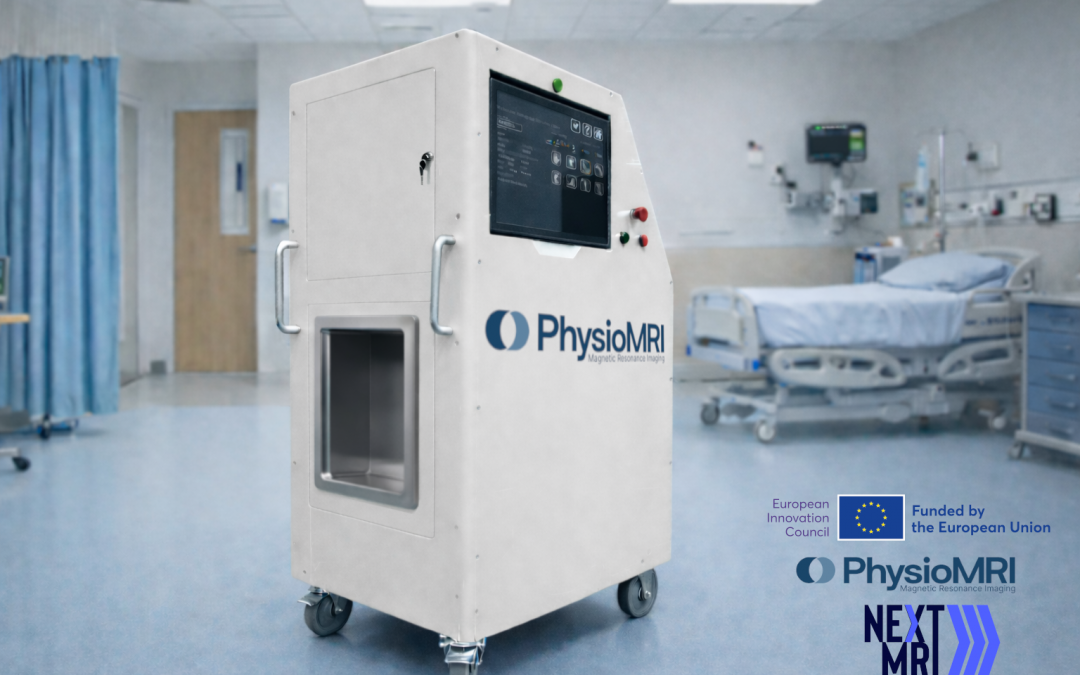
PhysioMRI, a Spanish company dedicated to the Medtech sector, is working on the development of NextMRI, a portable magnetic resonance imaging device designed to transform the use of medical imaging in hospital settings where conventional MRI is limited or simply unfeasible. Its proposal responds to a growing need: to bring the diagnostic capabilities of MRI to where the patient is, without relying on shielded rooms or complex transfers.
One of the key settings for resonance imaging is hospital patient rooms. In many cases, especially for bedridden patients or those with reduced mobility, transfer to a central radiology department involves clinical risks, resource consumption and diagnostic delays. A portable system allows basic extremity scans to be performed directly in the patient’s room, facilitating progress monitoring and supporting clinical decisions without disrupting the patient’s stability.
Emergency rooms represent another strategic area. In contexts where time is a decisive factor, having a portable MRI scanner can speed up the diagnostic process in selected cases, complementing other imaging techniques such as X-rays or CT scans. Although the portable device is not intended to replace high-powered systems, it does aim to fill a gap: providing useful clinical information quickly, safely and close to the point of care.
From an operational standpoint, the development of NextMRI focuses on clinical usability. The device’s design, simplified scanning protocols, and advanced post-processing support are intended to enable healthcare personnel to integrate it into their routine without the need for complex infrastructure. This approach is key to its adoption in hospital areas not originally designed to house MRI equipment.
Overall, the role of this portable MRI scanner in diverse hospital settings points to a paradigm shift: moving from a model focused on transferring the patient to the equipment to one in which the technology adapts to the clinical environment. With this approach, PhysioMRI is moving towards more accessible, flexible MRI that is aligned with the real needs of everyday hospital practice.
by Editorial Team | Nov 13, 2025 | NextMRI
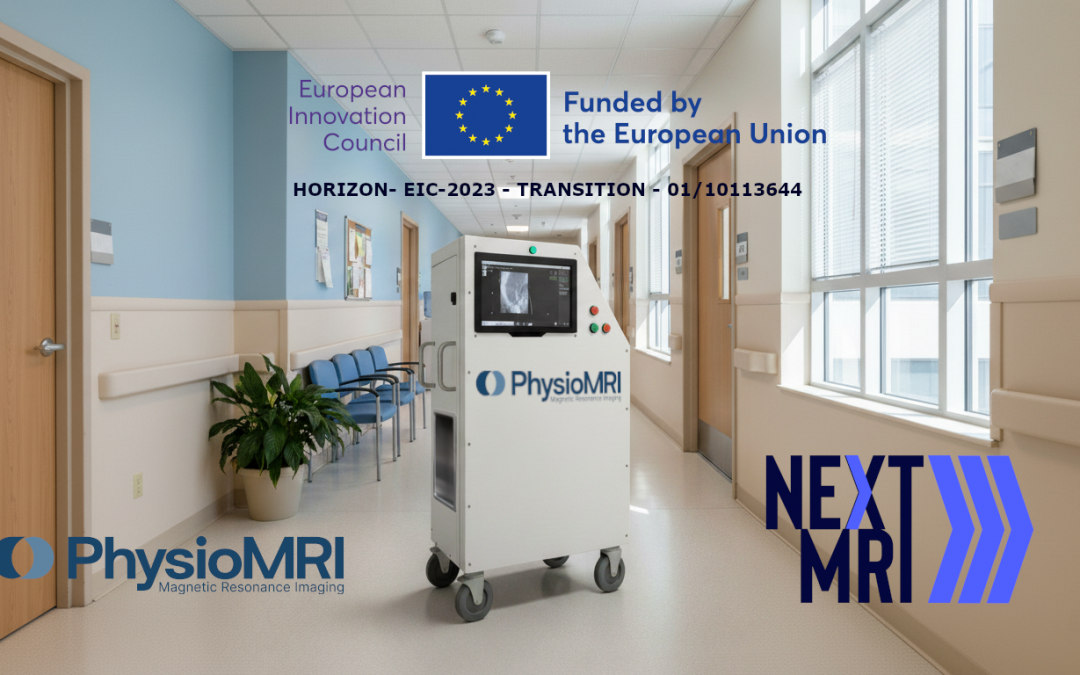
PhysioMRI moves towards clinical validation of NextMRI with trials in internationally renowned hospitals, bringing portable magnetic resonance imaging to new healthcare settings.
In the ever-changing landscape of medical technology, the NextMRI project, developed by Spanish company PhysioMRI, represents a decisive step towards the democratisation and accessibility of magnetic resonance imaging (MRI). This initiative seeks to break with the traditional limitations of conventional MRI equipment by offering a portable, efficient, high-resolution system that redefines the standards of diagnostic imaging. To this end, the Spanish company is addressing these challenges through an innovative design that combines technological miniaturisation, energy efficiency and ease of transport, allowing MRI to be taken beyond traditional hospital settings.
Towards clinical validation: upcoming trials in leading hospitals
Following a successful phase of development and technological integration, the NextMRI project is now preparing for a key step: clinical trials in real hospital settings.
Over the coming months, the system will be evaluated in collaboration with two prestigious institutions: the Hospital Universitari i Politècnic La Fe in Valencia and the Bergman Clinics Hospital in Netherlands.
These trials will validate the clinical performance, image quality and usability of the portable device in different healthcare settings.
The common goal is to confirm the diagnostic reliability of the system and its ability to integrate into current medical workflows, providing a flexible and accessible alternative to traditional MRI equipment.
A new horizon in diagnostic imaging
This project symbolises the convergence of engineering and medical science, offering a solution that redefines how and where magnetic resonance imaging studies can be performed.
With its compact design, low power consumption and advanced connectivity, this device promises to bring MRI to wherever it is needed — from large hospitals to rural clinics or mobile units — bringing the future of diagnostic imaging into the present.
With this commitment, PhysioMRI consolidates its leadership in the field of portable magnetic resonance imaging, ushering in a new era of accessibility, precision and mobility in modern medicine.
The upcoming clinical trials at La Fe in Valencia and Bergman Clinics mark a decisive milestone in this journey, bringing the technology of the new medical device closer to its final validation and the beginning of a new era in medical imaging.
by Editorial Team | Jul 22, 2025 | NextMRI
From non-ferromagnetic chassis to software integration: this is how the next generation of medical imaging is built
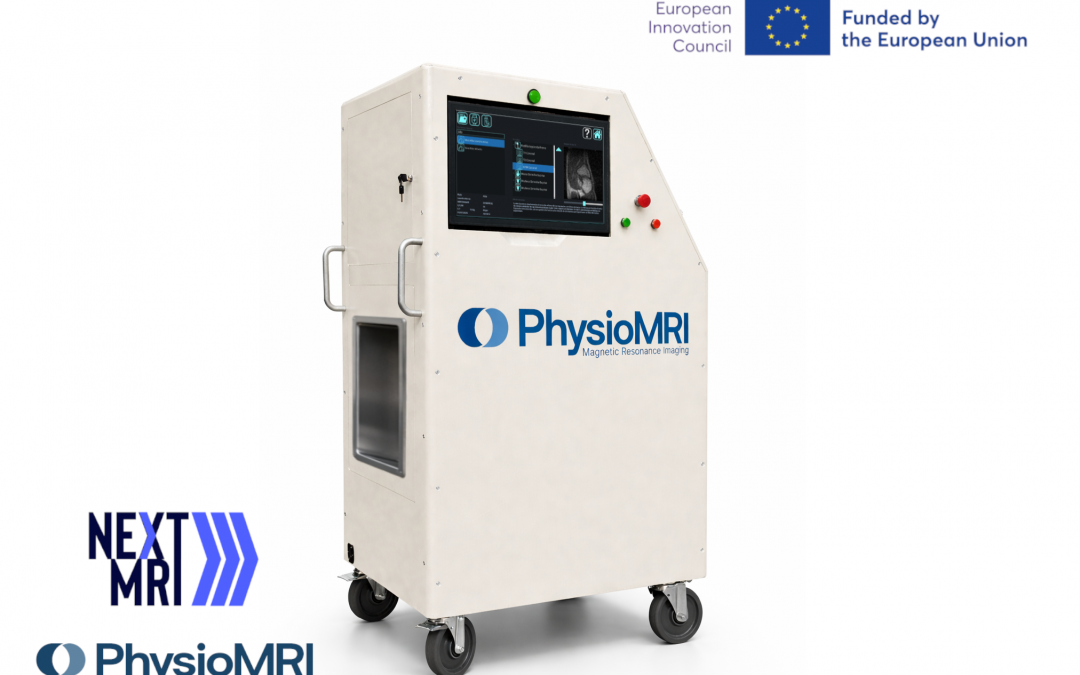
The NextMRI project, led by Spanish medtech company PhysioMRI, marks a milestone in the evolution of portable magnetic resonance imaging with the development of a compact, efficient and accessible device. The prototype assembly process is a critical phase that combines precision engineering, design and strict biomedical safety standards.
Assembly begins with the main structure, a lightweight but robust chassis that supports the low-power permanent magnet, the functional core of the system. This chassis is manufactured from non-ferromagnetic alloys to prevent interference and ensure magnetic field stability. Its design allows for quick adjustments during the validation phase and facilitates future iterations of the prototype.
Once the base structure and main magnet have been installed, the team proceeds to assemble the gradient system and radiofrequency (RF) coils. These coils are integrated using supports that ensure geometric precision and signal optimisation. Initial calibration is performed during assembly, ensuring that each coil meets the field uniformity required for quality images.
The next step involves installing the electronic system, which includes RF amplifiers, control modules, power supplies, and the data acquisition board. Each component is assembled under electromagnetic compatibility protocols to minimise noise and maximise signal stability. Connectivity between modules is organised using cabling and internal channels that optimise both safety and ease of maintenance.
Once the hardware has been integrated, the control and reconstruction software is implemented and tested directly on the assembled device. This allows communication between sensors, actuators, and the central processing system to be verified.
Finally, the NextMRI prototype undergoes functional verification and safety testing to ensure that the assembly complies with international medical device regulations.
The result is an innovative portable magnetic resonance imaging system, the product of meticulous assembly that reflects PhysioMRI’s commitment to technological excellence and the democratisation of diagnostic imaging.
