
PhysioMRI, a Spanish deep-tech company specialised in medical imaging technologies, has strengthened its financial position through the consolidation of €4.5 million in private capital raised to date, underscoring the company’s long-term viability and its capacity to attract sustained investor confidence.
In September 2025, PhysioMRI secured €2 million in new private investment, led by several Valencian family offices as well as relevant follow on contributions from previous stakeholders. This latest capital injection brings the company’s total private funding to €4 million, reflecting continued support from long-term investors as the company moves from development to regulatory and commercial execution.
In parallel, PhysioMRI is actively developing NextMRI, a strategic innovation project supported by the European Innovation Council (EIC), together with additional European and national programmes including CDTI (Check Health and Neotec Projects) and Eurostars-3 in collaboration with CDTI (ELLIMRI Project). These projects focus on technological development, clinical validation and innovation activities aligned with European research and innovation priorities.
Expenditures related to CE marking in Europe and FDA clearance in the United States are fully financed through private investment, while public funding is mainly focused on RD challenges and reducing technological risk.
The financing process and capital strategy were structured and led by Jon Fatelevich, co-founder of PhysioMRI, together with Alfonso Ríos, CEO and co-founder, who jointly managed the strategic, financial and governance processes supporting the company’s scale-up phase.
This private funding enables PhysioMRI to progress towards CE certification and FDA approval by the end of 2026, a key milestone for the commercial deployment of its low-field MRI systems in both European and international markets.
A Scalable Low-Field MRI Technology with Reduced Infrastructure Requirements
Magnetic resonance imaging (MRI) is one of the most valuable diagnostic tools in modern medicine, offering high diagnostic accuracy without the use of ionising radiation. However, conventional high-field MRI systems remain expensive and infrastructure-intensive, typically requiring shielded rooms, specialised cooling systems, dedicated facilities and substantial electrical power.
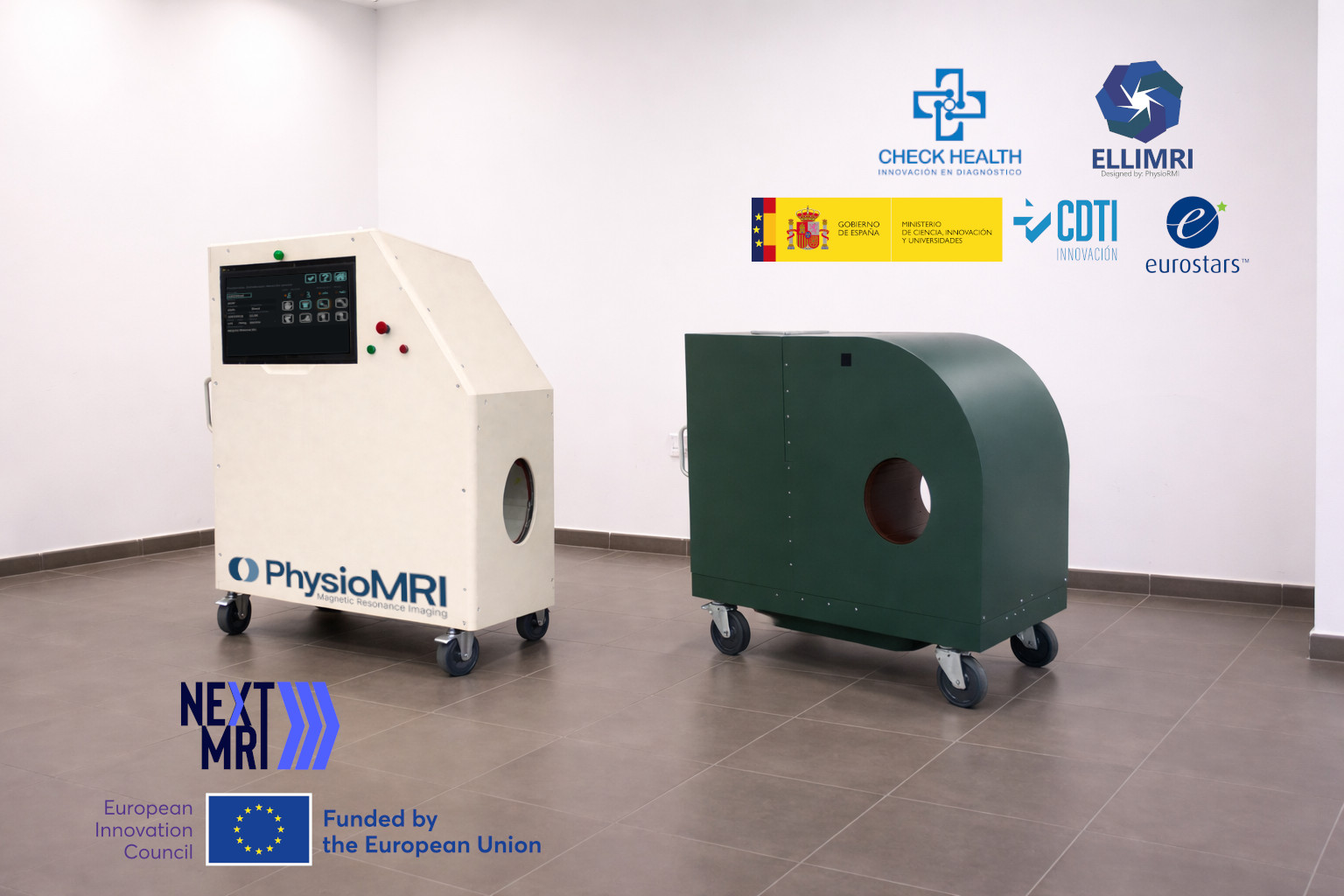
PhysioMRI has developed a portable low-field MRI system weighing less than 500 kg, designed for plug-and-play operation without the need for shielded rooms or complex infrastructure. This significantly reduces installation costs and enables deployment in a wide range of settings, including regional hospitals, outpatient clinics, rural areas, emergency units, mobile healthcare services and temporary medical facilities.
Recent advances in low-field MRI technology allow PhysioMRI systems to deliver clinically relevant, high-quality diagnostic images while lowering total cost of ownership and operational complexity. This approach removes long-standing barriers to adoption and supports broader access to advanced medical imaging.
NextMRI and Clinical Validation
Within this framework, NextMRI represents PhysioMRI’s flagship innovation initiative, aimed at advancing the Technology Readiness Level (TRL) of its low-field MRI platform towards structured clinical validation and system optimization.
The NextMRI system is currently undergoing clinical testing at Hospital Universitari i Politècnic La Fe (Valencia). Additional trials are planned at Hospital La Salud, as well as at partner hospitals in the Netherlands (Bergman Clinics), forming part of a coordinated international validation strategy aligned with European clinical and regulatory standards.
Industrialization Strategy and Business Model
PhysioMRI expects to manufacture more than 10 systems during the current year, establishing the foundations for scalable industrial production. By 2027, the company aims to deploy at least 36 units, supported by a pay-per-use business model that significantly reduces upfront investment requirements for healthcare providers.
This model is designed to ensure recurring revenues, operational sustainability and accelerated market adoption, reinforcing PhysioMRI’s financial robustness beyond the duration of publicly funded projects.
Expected Impact
By combining sustained private investment with targeted European innovation support, PhysioMRI is positioned to translate advanced medical imaging research into deployable, market-ready solutions. The company’s low-field MRI technology has the potential to democratise access to MRI diagnostics, reduce costs per scan and extend high-quality imaging services to healthcare environments traditionally underserved by conventional MRI infrastructure.
Jon Fatelevich
Co-Founder PhysioMRI