
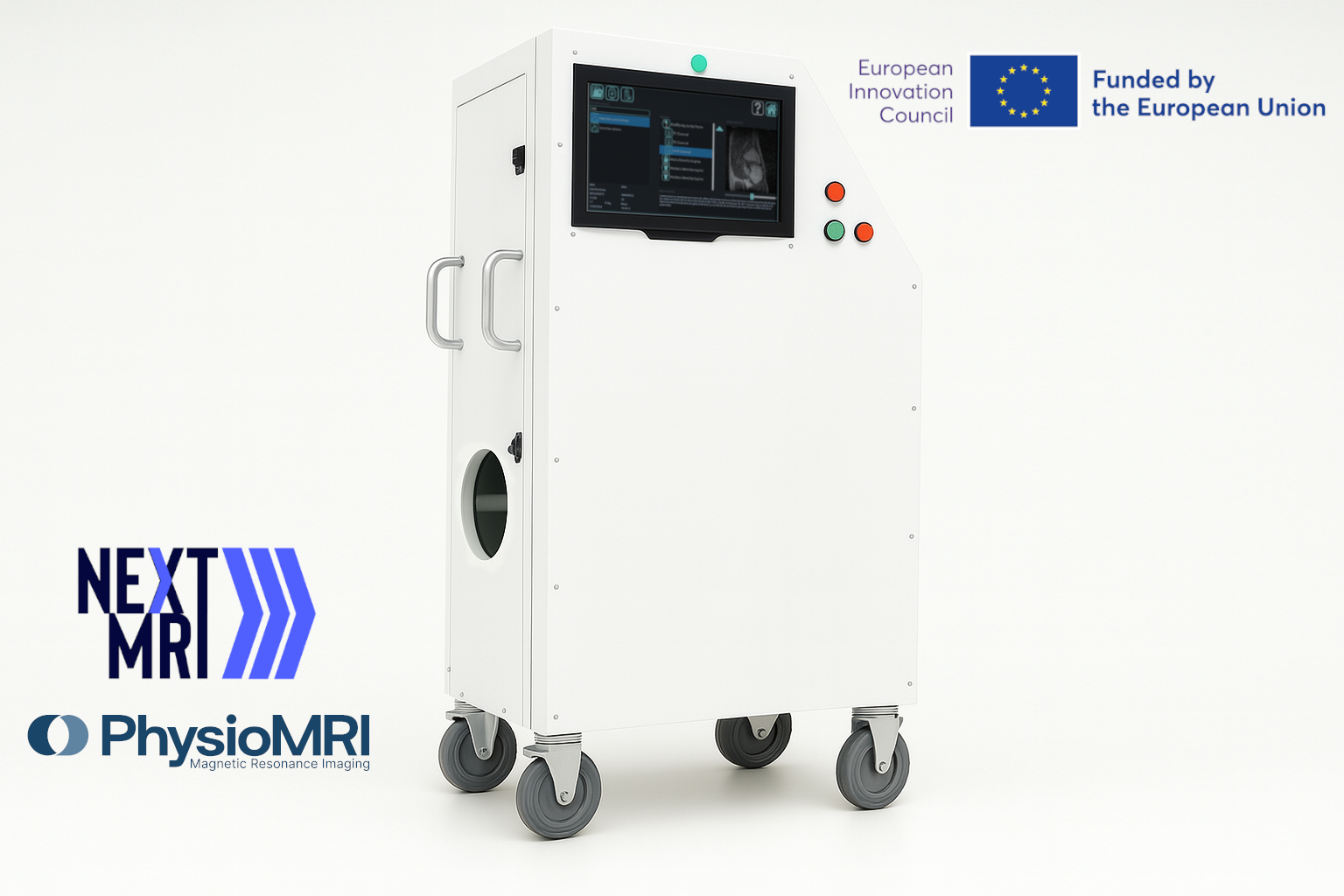
From non-ferromagnetic chassis to software integration: this is how the next generation of medical imaging is built
The NextMRI project, led by Spanish medtech company PhysioMRI, marks a milestone in the evolution of portable magnetic resonance imaging with the development of a compact, efficient and accessible device. The prototype assembly process is a critical phase that combines precision engineering, design and strict biomedical safety standards.
Assembly begins with the main structure, a lightweight but robust chassis that supports the low-power permanent magnet, the functional core of the system. This chassis is manufactured from non-ferromagnetic alloys to prevent interference and ensure magnetic field stability. Its design allows for quick adjustments during the validation phase and facilitates future iterations of the prototype.
Once the base structure and main magnet have been installed, the team proceeds to assemble the gradient system and radiofrequency (RF) coils. These coils are integrated using supports that ensure geometric precision and signal optimisation. Initial calibration is performed during assembly, ensuring that each coil meets the field uniformity required for quality images.
The next step involves installing the electronic system, which includes RF amplifiers, control modules, power supplies, and the data acquisition board. Each component is assembled under electromagnetic compatibility protocols to minimise noise and maximise signal stability. Connectivity between modules is organised using cabling and internal channels that optimise both safety and ease of maintenance.
Once the hardware has been integrated, the control and reconstruction software is implemented and tested directly on the assembled device. This allows communication between sensors, actuators, and the central processing system to be verified.
Finally, the NextMRI prototype undergoes functional verification and safety testing to ensure that the assembly complies with international medical device regulations.
The result is an innovative portable magnetic resonance imaging system, the product of meticulous assembly that reflects PhysioMRI’s commitment to technological excellence and the democratisation of diagnostic imaging.
