by Editorial Team | Feb 11, 2026 | Investors
PhysioMRI, a Spanish deep-tech company specialised in medical imaging technologies, has strengthened its financial position through the consolidation of €4.5 million in private capital raised to date, underscoring the company’s long-term viability and its capacity to attract sustained investor confidence.
In September 2025, PhysioMRI secured €2 million in new private investment, led by several Valencian family offices as well as relevant follow on contributions from previous stakeholders. This latest capital injection brings the company’s total private funding to €4 million, reflecting continued support from long-term investors as the company moves from development to regulatory and commercial execution.
In parallel, PhysioMRI is actively developing NextMRI, a strategic innovation project supported by the European Innovation Council (EIC), together with additional European and national programmes including CDTI (Check Health and Neotec Projects) and Eurostars-3 in collaboration with CDTI (ELLIMRI Project). These projects focus on technological development, clinical validation and innovation activities aligned with European research and innovation priorities.
Expenditures related to CE marking in Europe and FDA clearance in the United States are fully financed through private investment, while public funding is mainly focused on RD challenges and reducing technological risk.
The financing process and capital strategy were structured and led by Jon Fatelevich, co-founder of PhysioMRI, together with Alfonso Ríos, CEO and co-founder, who jointly managed the strategic, financial and governance processes supporting the company’s scale-up phase.
This private funding enables PhysioMRI to progress towards CE certification and FDA approval by the end of 2026, a key milestone for the commercial deployment of its low-field MRI systems in both European and international markets.
A Scalable Low-Field MRI Technology with Reduced Infrastructure Requirements
Magnetic resonance imaging (MRI) is one of the most valuable diagnostic tools in modern medicine, offering high diagnostic accuracy without the use of ionising radiation. However, conventional high-field MRI systems remain expensive and infrastructure-intensive, typically requiring shielded rooms, specialised cooling systems, dedicated facilities and substantial electrical power.
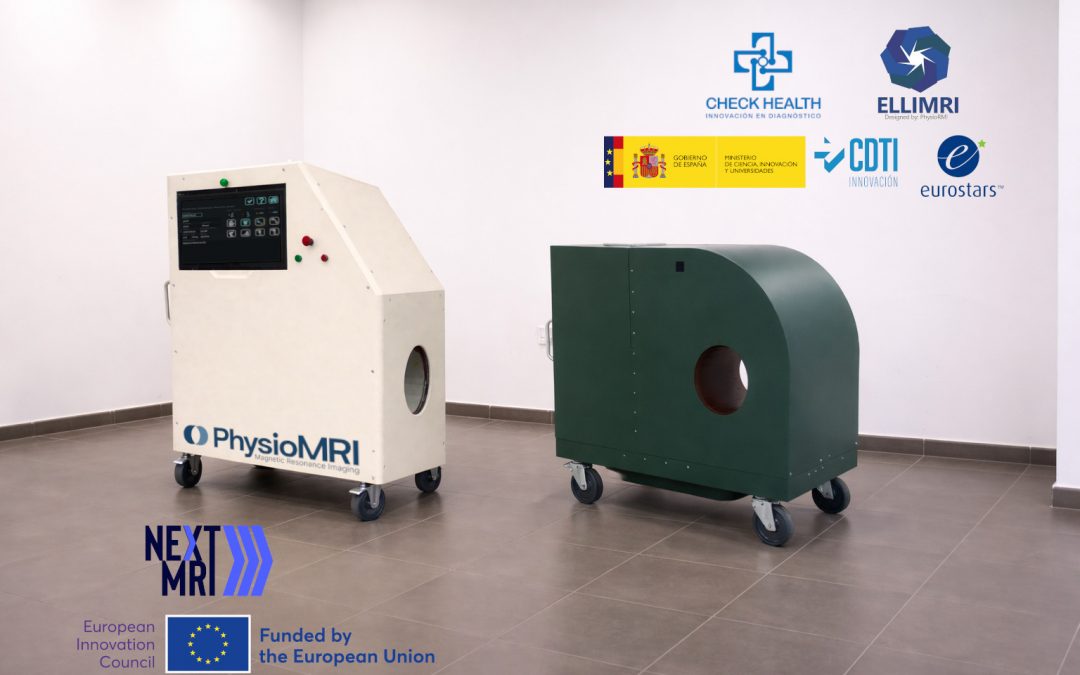
PhysioMRI has developed a portable low-field MRI system weighing less than 500 kg, designed for plug-and-play operation without the need for shielded rooms or complex infrastructure. This significantly reduces installation costs and enables deployment in a wide range of settings, including regional hospitals, outpatient clinics, rural areas, emergency units, mobile healthcare services and temporary medical facilities.
Recent advances in low-field MRI technology allow PhysioMRI systems to deliver clinically relevant, high-quality diagnostic images while lowering total cost of ownership and operational complexity. This approach removes long-standing barriers to adoption and supports broader access to advanced medical imaging.
NextMRI and Clinical Validation
Within this framework, NextMRI represents PhysioMRI’s flagship innovation initiative, aimed at advancing the Technology Readiness Level (TRL) of its low-field MRI platform towards structured clinical validation and system optimization.
The NextMRI system is currently undergoing clinical testing at Hospital Universitari i Politècnic La Fe (Valencia). Additional trials are planned at Hospital La Salud, as well as at partner hospitals in the Netherlands (Bergman Clinics), forming part of a coordinated international validation strategy aligned with European clinical and regulatory standards.
Industrialization Strategy and Business Model
PhysioMRI expects to manufacture more than 10 systems during the current year, establishing the foundations for scalable industrial production. By 2027, the company aims to deploy at least 36 units, supported by a pay-per-use business model that significantly reduces upfront investment requirements for healthcare providers.
This model is designed to ensure recurring revenues, operational sustainability and accelerated market adoption, reinforcing PhysioMRI’s financial robustness beyond the duration of publicly funded projects.
Expected Impact
By combining sustained private investment with targeted European innovation support, PhysioMRI is positioned to translate advanced medical imaging research into deployable, market-ready solutions. The company’s low-field MRI technology has the potential to democratise access to MRI diagnostics, reduce costs per scan and extend high-quality imaging services to healthcare environments traditionally underserved by conventional MRI infrastructure.
Jon Fatelevich
Co-Founder PhysioMRI
by Editorial Team | Jan 12, 2026 | NextMRI
The role of NextMRI in hospital wards and emergency departments
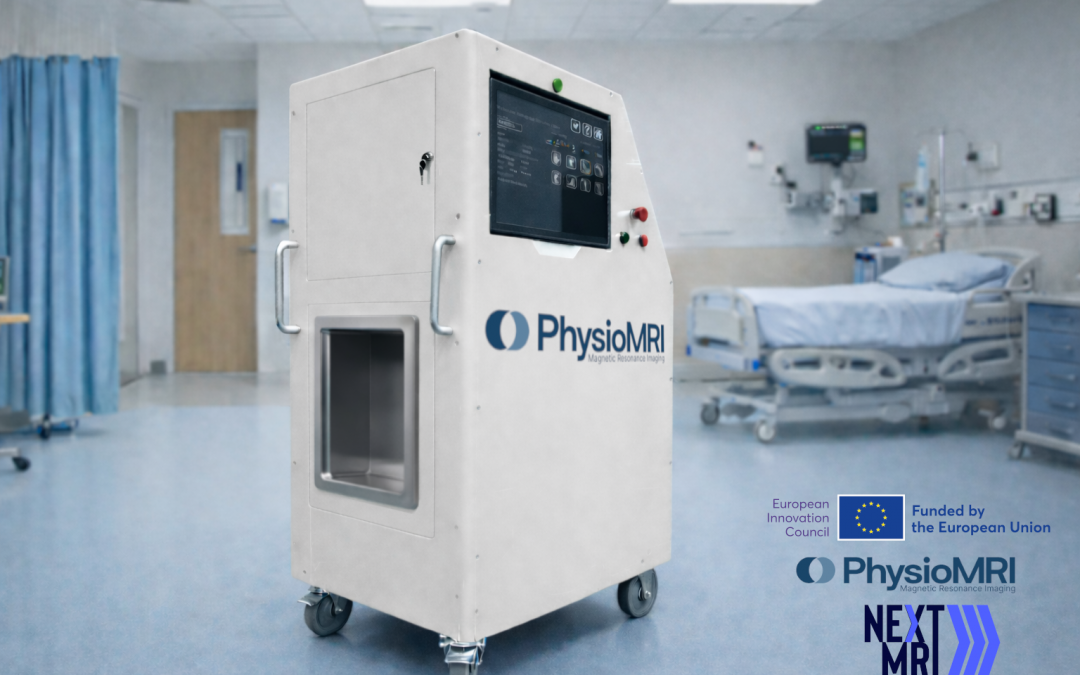
PhysioMRI, a Spanish company dedicated to the Medtech sector, is working on the development of NextMRI, a portable magnetic resonance imaging device designed to transform the use of medical imaging in hospital settings where conventional MRI is limited or simply unfeasible. Its proposal responds to a growing need: to bring the diagnostic capabilities of MRI to where the patient is, without relying on shielded rooms or complex transfers.
One of the key settings for resonance imaging is hospital patient rooms. In many cases, especially for bedridden patients or those with reduced mobility, transfer to a central radiology department involves clinical risks, resource consumption and diagnostic delays. A portable system allows basic extremity scans to be performed directly in the patient’s room, facilitating progress monitoring and supporting clinical decisions without disrupting the patient’s stability.
Emergency rooms represent another strategic area. In contexts where time is a decisive factor, having a portable MRI scanner can speed up the diagnostic process in selected cases, complementing other imaging techniques such as X-rays or CT scans. Although the portable device is not intended to replace high-powered systems, it does aim to fill a gap: providing useful clinical information quickly, safely and close to the point of care.
From an operational standpoint, the development of NextMRI focuses on clinical usability. The device’s design, simplified scanning protocols, and advanced post-processing support are intended to enable healthcare personnel to integrate it into their routine without the need for complex infrastructure. This approach is key to its adoption in hospital areas not originally designed to house MRI equipment.
Overall, the role of this portable MRI scanner in diverse hospital settings points to a paradigm shift: moving from a model focused on transferring the patient to the equipment to one in which the technology adapts to the clinical environment. With this approach, PhysioMRI is moving towards more accessible, flexible MRI that is aligned with the real needs of everyday hospital practice.

by Editorial Team | Jan 9, 2026 | ELLIMRI
PhysioMRI is committed to an agile and resilient diagnostic model for emergencies, rural areas and hard-to-reach environments
This project has received funding from the “Eurostars-3 Call 4” program, with co-funding from the CDTI and the European Union’s “Horizon Europe” Framework Program for Research and Innovation.
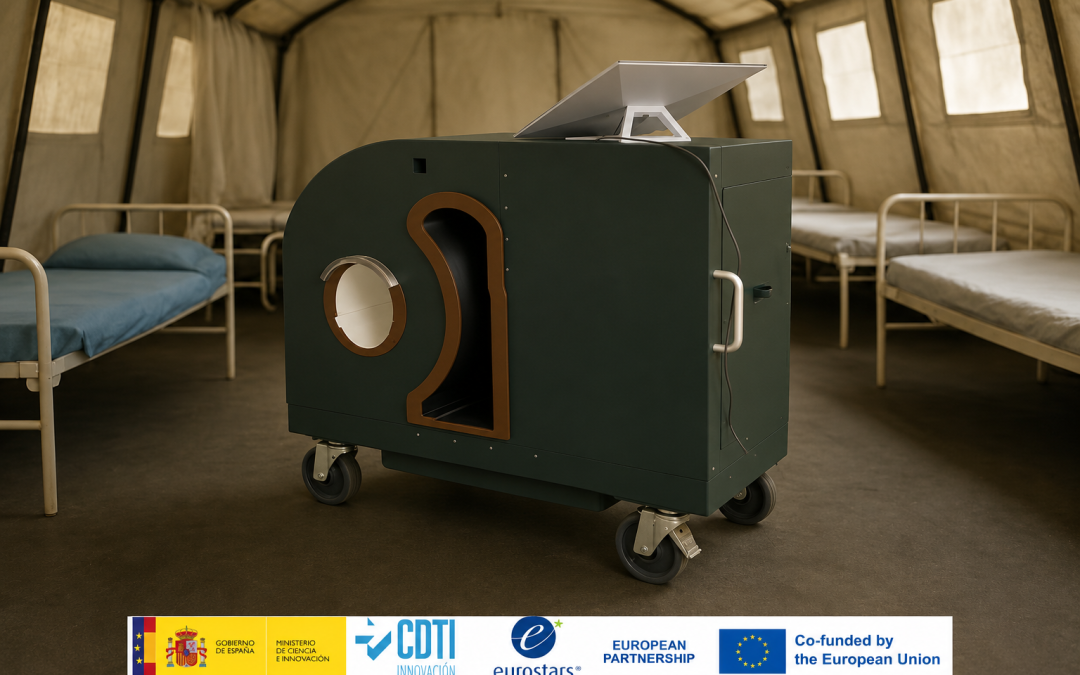
PhysioMRI, a company specialising in the research and development of portable magnetic resonance imaging (MRI) scanners, has made significant progress in the ELLIMRI Project, a line of portable MRI scanners designed specifically to operate in extreme environments. The objective is clear: to bring high-quality diagnostic imaging to contexts where conventional MRI is unfeasible, whether due to lack of infrastructure, energy limitations or adverse environmental conditions. At a time when medicine is seeking to reduce access gaps, this device is positioned as a technological response aimed at rural areas, humanitarian emergencies, and field hospitals.
One of the main milestones of the project is the optimisation of the system to work with minimal resources. The new MRI scanner has been designed with a compact and robust architecture, prioritising operational stability in the face of temperature variations, dust, humidity and vibrations associated with transport. Unlike traditional installations, which require dedicated rooms and auxiliary equipment, PhysioMRI’s approach is ‘install and operate’: rapid deployment, simplified calibration and continuous operation in complex logistics environments.
At the same time, the project has focused on energy autonomy. The latest developments incorporate optimised consumption modes, designed to work with unstable electricity grids, generators or hybrid solutions. This is particularly important for rural areas and rapid response devices in the event of disasters, where the continuity of clinical service depends, to a large extent, on the equipment’s ability to adapt to the reality on the ground.
Another notable advance is the evolution of the clinical workflow. The medical device is geared towards agile and repeatable protocols that facilitate its use by healthcare teams with different levels of specialisation. The integration of support software guides image acquisition and reduces operational errors. In addition, the system is designed to integrate with telemedicine circuits, so that scans can be monitored or reported remotely when there is no radiologist on site.
With the ELLIMRI project, PhysioMRI is not only seeking to miniaturise complex technology, but also to redefine where and when magnetic resonance imaging can be performed. The potential impact is significant: earlier diagnosis, better-informed clinical decisions and frontline care capabilities, even in the most demanding scenarios. In short, this medical device represents a significant step towards truly mobile, resilient and accessibility-focused medical imaging.
Funded by the CDTI

by Editorial Team | Nov 28, 2025 | General News
The Spanish company has reinforced its commitment to safety, traceability and continuous improvement
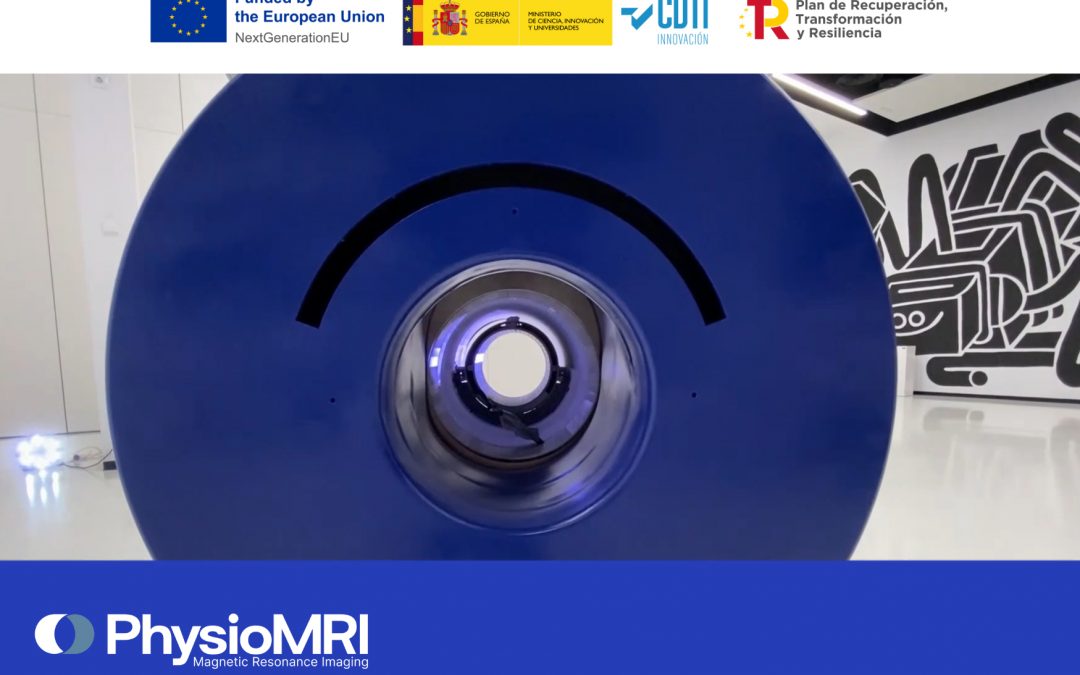
PhysioMRI, a company dedicated to the research and development of portable magnetic resonance imaging systems, has already received ISO 13485 certification, an international standard that accredits quality and safety in the design and manufacture of medical devices. This achievement represents a decisive step in consolidating the company as a technological benchmark in the advanced medical imaging sector.
The ISO 13485 standard establishes the requirements that quality management systems applied to medical devices must meet, from the initial stages of research to production, distribution, and technical support. Its purpose is to ensure that each product is developed under controlled, reproducible processes focused on patient and user safety. For PhysioMRI, this certification represents external validation of the methodological rigour with which it has been working on the development of its portable magnetic resonance imaging devices, a technology that promises to transform clinical and research environments.
The certification process has involved a comprehensive review of internal procedures, technical documentation, quality controls, component traceability and risk management mechanisms. The company has strengthened its verification and validation protocols, optimised its workflows, and adopted new control tools to ensure the reliability of each of the subsystems in its portable MRI equipment. Thanks to these improvements, PhysioMRI not only complies with international regulatory standards, but also increases the efficiency and consistency of its operations.
One of the most important aspects for PhysioMRI is that ISO 13485 does not merely validate the final product, but also requires an organizational culture focused on quality. This includes staff training, document management, supplier validation, manufacturing process control, and the implementation of clear post-marketing surveillance protocols. For a technology as sensitive as portable MRI, these criteria are essential to minimize risks and ensure reliable clinical performance.
In addition, obtaining ISO 13485 certification facilitates the entry of this new MRI into international markets. Many regulatory bodies, such as the FDA in the United States or the European Medicines Agency (EMA), consider this standard to be a prerequisite or a key element in approval dossiers. In this way, certification becomes an accelerator for technology transfer, allowing the device to reach hospitals, clinics, and research centers with the necessary guarantees.
ISO 13485 certification represents a strategic milestone for PhysioMRI. It marks the beginning of a new era in which innovation, quality and safety come together to drive the next generation of portable MRI systems.

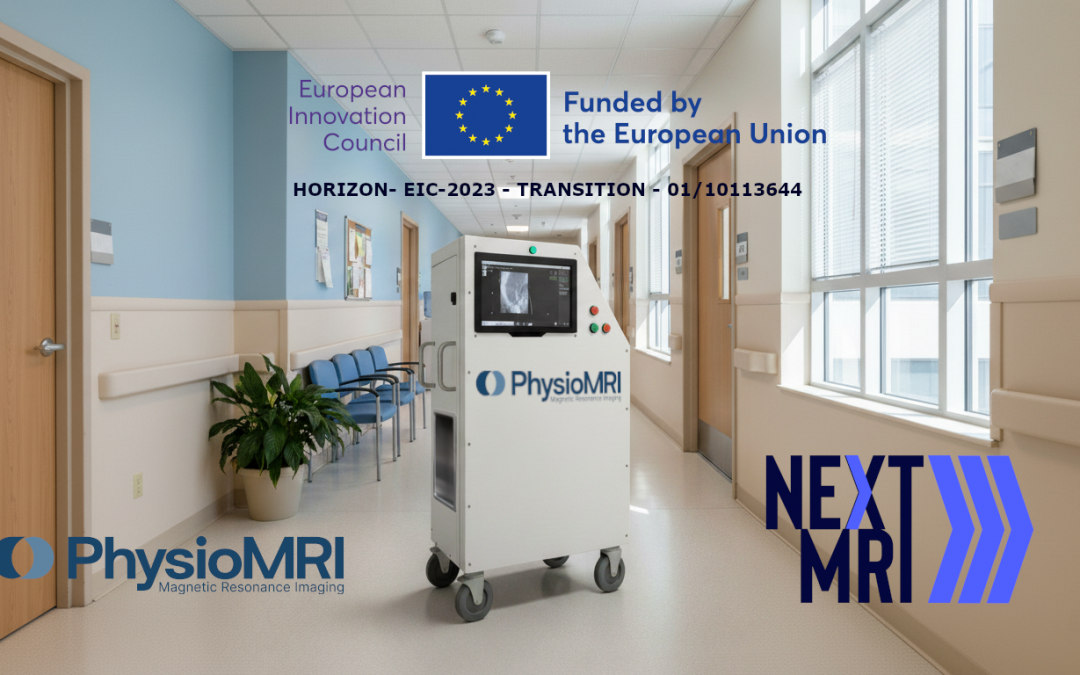
by Editorial Team | Nov 13, 2025 | NextMRI
PhysioMRI moves towards clinical validation of NextMRI with trials in internationally renowned hospitals, bringing portable magnetic resonance imaging to new healthcare settings.
In the ever-changing landscape of medical technology, the NextMRI project, developed by Spanish company PhysioMRI, represents a decisive step towards the democratisation and accessibility of magnetic resonance imaging (MRI). This initiative seeks to break with the traditional limitations of conventional MRI equipment by offering a portable, efficient, high-resolution system that redefines the standards of diagnostic imaging. To this end, the Spanish company is addressing these challenges through an innovative design that combines technological miniaturisation, energy efficiency and ease of transport, allowing MRI to be taken beyond traditional hospital settings.
Towards clinical validation: upcoming trials in leading hospitals
Following a successful phase of development and technological integration, the NextMRI project is now preparing for a key step: clinical trials in real hospital settings.
Over the coming months, the system will be evaluated in collaboration with two prestigious institutions: the Hospital Universitari i Politècnic La Fe in Valencia and the Bergman Clinics Hospital in Netherlands.
These trials will validate the clinical performance, image quality and usability of the portable device in different healthcare settings.
The common goal is to confirm the diagnostic reliability of the system and its ability to integrate into current medical workflows, providing a flexible and accessible alternative to traditional MRI equipment.
A new horizon in diagnostic imaging
This project symbolises the convergence of engineering and medical science, offering a solution that redefines how and where magnetic resonance imaging studies can be performed.
With its compact design, low power consumption and advanced connectivity, this device promises to bring MRI to wherever it is needed — from large hospitals to rural clinics or mobile units — bringing the future of diagnostic imaging into the present.
With this commitment, PhysioMRI consolidates its leadership in the field of portable magnetic resonance imaging, ushering in a new era of accessibility, precision and mobility in modern medicine.
The upcoming clinical trials at La Fe in Valencia and Bergman Clinics mark a decisive milestone in this journey, bringing the technology of the new medical device closer to its final validation and the beginning of a new era in medical imaging.
