by Editorial Team | Mar 10, 2024 | General News
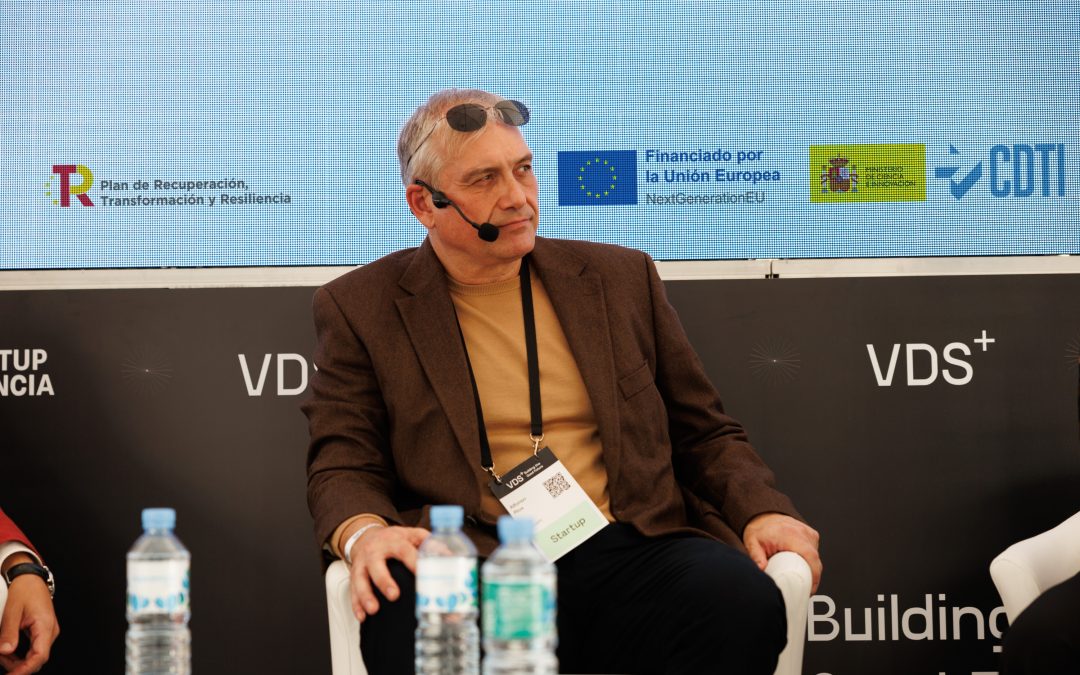
The recent Valencia Summit has witnessed the outstanding participation of PhysioMRI, a leading company in the field of technology applied to medical diagnosis.
The event, which brought together to professionals from various sectors and prominent experts in innovation, served as platform to present and discuss the most recent advances in the field of health and welfare. PhysioMRI, based in Valencia, is proud to have shared its vision and progress in the development of advanced physiotherapy solutions at the Valencia Summit. The company has been at the forefront of the integration of emerging technologies to improve the quality of life of people through more effective and personalized physical therapies.
During his participation in the Valencia Summit, Alfonso Ríos, the manager of PhysioMRI, presented the flagship project, which has captured the attention of the medical community. Participate in Valencia Summit is recognition of the great work and dedication carried out by the entire team of PhysioMRI for all these years.” “We are committed to leading the revolution in MRI technology quality, innovation and excellence in manufacturing “state-of-the-art MRI scanners.” The PhysioMRI project is based on the premise that each patient is unique, and, therefore, Therapies must be tailored to individual needs.
The platform uses algorithms advanced tools to analyze biometric data and create personalized treatment programs that maximize the effectiveness of physical therapy. Alfonso also highlighted the financial support of the CDTI that represents a significant milestone that will enhance the continuous development of the solutions proposed by the company PhysioMRI in the field of medical diagnosis. The approval of aid within the CDTI Neotec program not only validates the vision and PhysioMRI’s commitment to revolutionizing the field of clinical diagnosis through the low-field magnetic resonance technique, but also provides the resources needed to accelerate research and deployment of new functionalities on its platform. This financial support will allow PhysioMRI consolidate its position as a leader in the field of technology applied to diagnosis clinical.
BACK TO NEWS


(more…)

by Editorial Team | Feb 29, 2024 | Investors
The Valencian startup PhysioMRI , which has developed low-field magnetic resonance medical technology, has closed an investment and financing round of 4 million euros . An injection in which it has obtained funds from the Horizon Europe program of the European Union, in addition to the CDTI of the Ministry of Science and Innovation and the Valencian Institute of Finance (IVF), together with previous investors, which include personalities from the world of sport and technology.
Among the investors who are part of the shareholders are recognized basketball figures, such as former NBA players Luis Scola or Víctor Claver . Prestigious businessmen such as Jorge Alonso, Javier Lopezosa, or the Fernández Serosa brothers are also part of it, all of them with experience in the world of sports, the distribution of medical devices and investment in technology, according to the company itself.
PhysioMRI already has a team in operation at the facilities of the Hospital La Fe in Valencia, under a collaboration agreement to improve neural networks and image processing. The company is a leader in the development of low-field MRI devices, priced up to 20 times lower than current devices .
Jon Fatelevich, co-founder of PhysioMRI and leader of the financing and commercialization strategy, explained that “this investment round will allow us to fulfill our ambitious roadmap. In the next 18 months, we will complete CE and FDA certifications and begin manufacturing. of the first generation of our MRI machines.
The company’s intention is to begin selling its product this year, although the first deliveries will be long-term. “The interest from clinics, doctors and even distributors is extraordinary, and in 2023 we will begin the commercialization of our devices, with an estimated delivery date for early 2025,” he explains. This technology has the potential to reduce the cost of testing for patients by 70%.
BACK TO NEWS
(more…)
by Editorial Team | Feb 28, 2024 | General News
The machine is already in the facilities of the Polytechnic University of Valencia (UPV), where it has been tested on humans
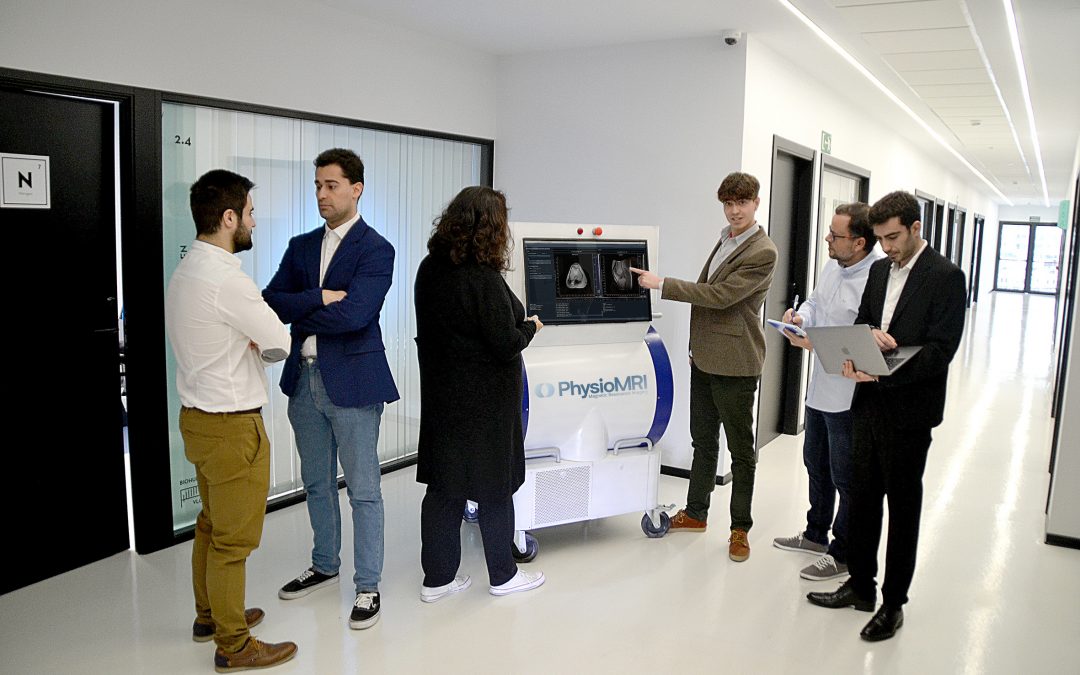
The emerging company PhysioMRI has developed, together with the Higher Council for Scientific Research (CSIC), an innovative magnetic resonance device that reduces the cost of current devices by up to 30 times, with the same diagnostic result. The machine is already in the facilities of the Universitat Politècnica de València (UPV), where it has been tested on humans, and the new scanner has shown ” incredible results and offers professionals a high quality image “, as reported the company. It is a device “that has a couple of steps left to be ready for large-scale commercialization ” and become a great advance in medicine worldwide, which will make Spain “a benchmark in the field of research.” of health and advances in biomedical technology,” they indicate.
The low-field machine costs between 20 and 30 times less than current devices , something that, according to sources, “constitutes a great medical advance that will democratize the use of this important diagnostic equipment and will result in better people’s health.” The objective is that MRI diagnosis can reach all parts of the world and the cost of each test does not exceed 50 euros , when the current average is about 300 euros.
The machine has been developed by a research team led by the director of I3M, José María Benlloch, and which also includes Joseba Alonso , a doctor in atomic physics with extensive experience in research projects worldwide. Within the investment support of PhysioMRI there are references from the world of sports, such as the Olympic champion with Argentina Luis Scola or the silver medalist with Spain in the Olympic Games Fernando San Emeterio who, according to sources, know the applications of the machine and its importance for the health of the athlete and of people in general.
BACK TO NEWS
(more…)
by Editorial Team | Feb 28, 2024 | General News
CDTI recognizes the excellence of PhysioMRI: Help from the NEOTEC program to drive innovation in MRI and diagnostics clinical The Center for Industrial Technological Development (CDTI) has announced the granting significant aid to the leading medical technology company, PhysioMRI, through its prestigious NEOTEC program.
This initiative supports innovative and technological projects that have strong potential growth and contribute to the development of the economy and society. The main objective of the CDTI NEOTEC Program is to promote the emergence of new technology companies in Spain, supporting scientific and technological based projects. Selecting PhysioMRI for receiving this help underlines the quality and innovative potential of your proposal in the field of medical diagnosis applied to physiotherapy.
PhysioMRI has demonstrated a continued commitment to excellence in research and development of medical technologies, especially highlighting in the integration of advances in magnetic resonance with applications practices in the diagnosis and monitoring of physiological conditions.
Since its creation PhysioMRI has dedicated all its efforts to developing the technology with a pioneering low-field MRI approach specific for arms and legs, in the Skeletal Muscle area, since presents significant benefits in terms of costs and accessibility without compromise image quality. This approach has allowed the company overcome economic and geographical barriers, meeting the objective of democratize the use of MRI using the latest technology medical as a diagnostic technique.
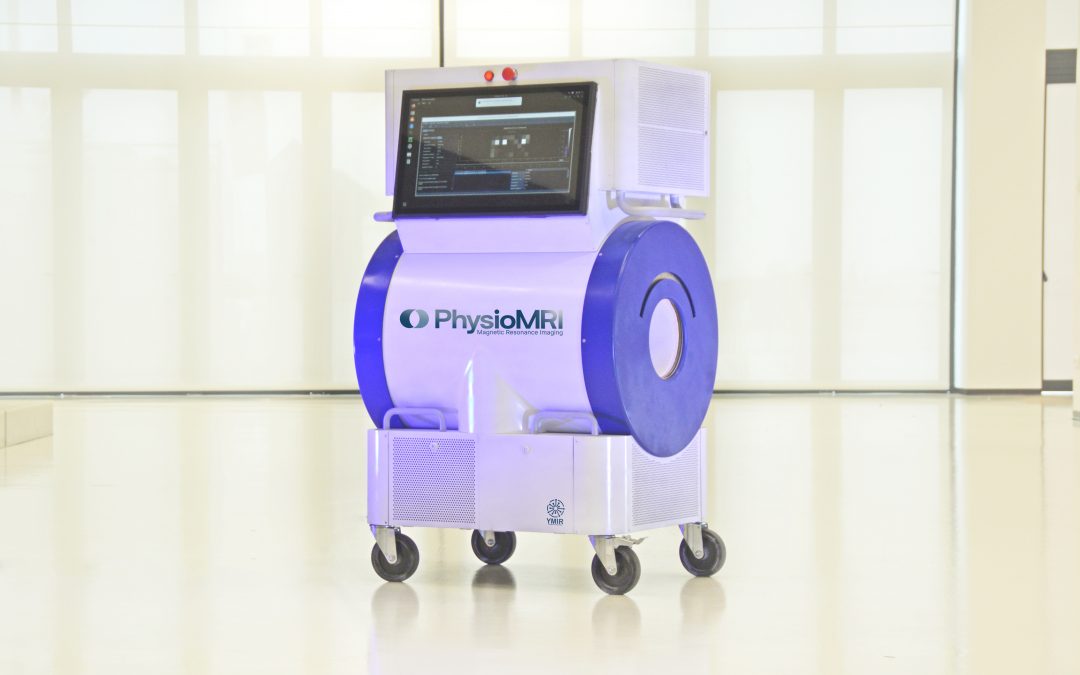
Among the notable advantages of this device are its size compact, light weight, transportation and installation compared to the conventional MRI scanners used in clinical settings. The capacity of This device can be used in both clinical and residential settings. provides a dynamism impossible with current scanners. The CEO of PhysioMRI, Alfonso Ríos, expressed his enthusiasm for this strategic collaboration with the CDTI, highlighting that this aid will allow the company advance more rapidly in research and development of pioneering technologies that will significantly improve the diagnosis and treatment of various medical conditions.
BACK TO NEWS
(more…)
by Editorial Team | Feb 28, 2024 | General News
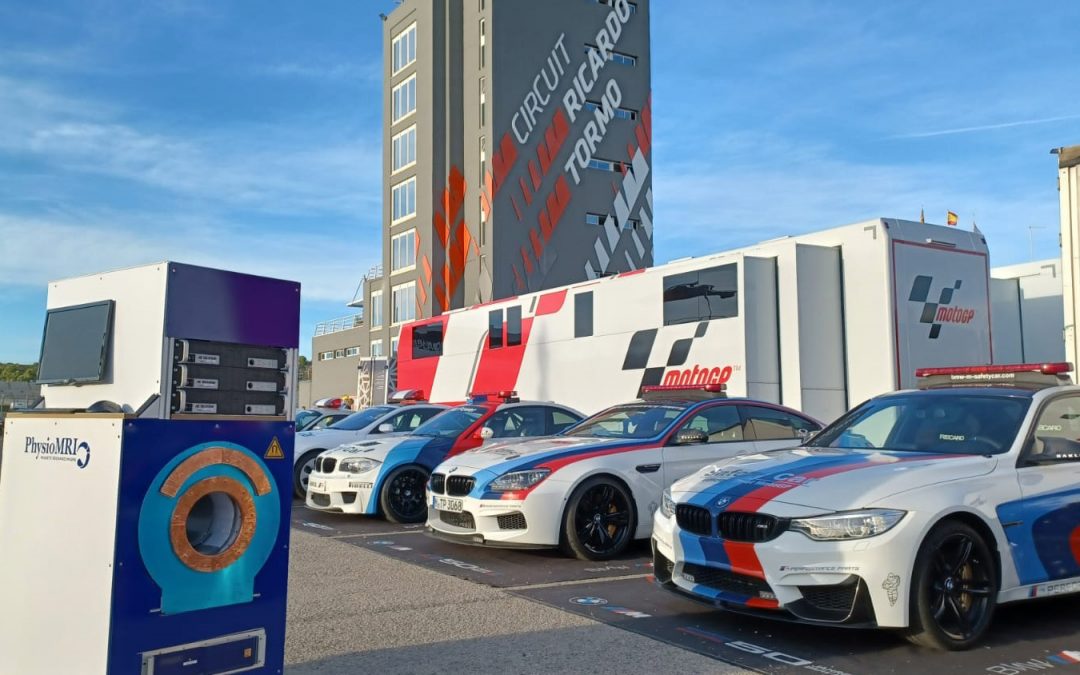
The Motul Grand Prix of the Valencian Community will debut the first portable magnetic resonance device, developed by the Polytechnic University of Valencia (UPV) and the Higher Council for Scientific Research (CSIC) and the spin-off PhysioMRI Tech.
During the celebration of the Motul Grand Prix of the Valencian Community , a pioneering device has been installed in the medical center of the Ricardo Tormo Circuit to perform resonances on arms and legs, under the supervision of Dr. Vicent Vila, Chief Medical Officer of the Circuit and from Dr. Ángel Charte, MotoGP medical director .
It is the first low-cost, portable magnetic resonance imaging technology, with high diagnostic quality and low consumption. Specifically, it is used to perform arm and leg scans.This instrument has been developed by a research group from the Institute of Instrumentation for Molecular Imaging, a joint center of the UPV and the CSIC, developed together with PhysioMri Tech. A project led by the Valencian Joseba Alonso , CSIC researcher.
“In these first tests, we hope that our system can be used to complement the clinical diagnosis of the Circuit’s medical team, allowing the taking of images of drivers, family members, engineers and team personnel, Circuit and organization workers, marshals. track, etc. Our scanner is the first that can be used in hospitals on racing circuits, where there is usually some X-ray device, but never magnetic resonance imaging,” highlights Alonso.
This device, unique in the world, will be used for the first time in the Motul Grand Prix of the Valencian Community and will allow the drivers to perform MRIs on the Ricardo Tormo Circuit itself , without the need to travel.
BACK TO NEWS
(more…)
by Editorial Team | Feb 28, 2024 | General News
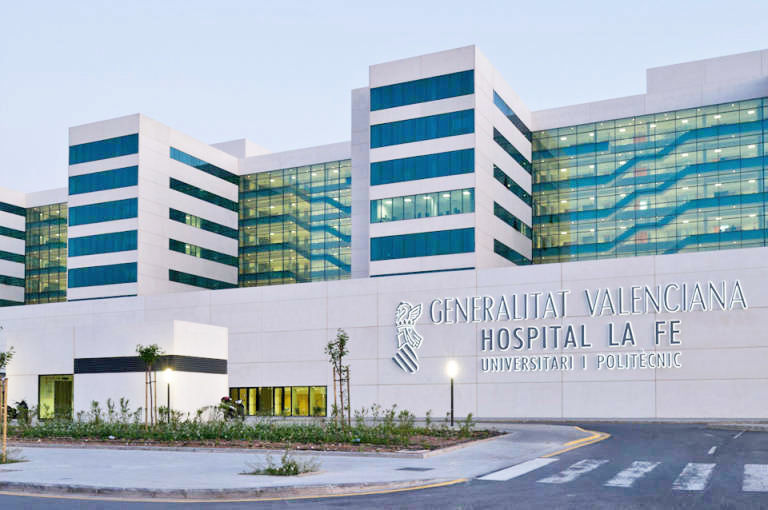
The teams from the Health Research Institute (IIS) of the La Fe Hospital in València, led by Dr. Luis Martí Bonmatí , have the PhysioMRI magnetic resonance machine in their facilities.
It is “the first portable MRI machine on the market and is being tested by the center’s professionals who, for their part, are offering all their advances in neural networks and artificial intelligence to enhance the images extracted from this machine.”
“Dr. Martí has a very long history bringing techniques and innovations from the laboratory to clinical practice, so having our system at La Fe Hospital is a privilege that guarantees us being in the best hands we could have, it is a great experience at the service of our machine,” explains Joseba Alonso, CSIC researcher who leads the PhysioMRI project, in a statement.
“Right now that our team is in the IIS La Fe facilities helps us perfect the machine thanks to the neural network and artificial intelligence technology that they put at our service, in addition to the fact that we are beginning to generate clinical evidence in a fundamental hospital environment to certify the machine, a prior step for its certification,” adds Alonso.
The IIS La Fe is a world reference in research and the fact of having the machine tested in its facilities significantly benefits PhysioMRI, which is receiving its artificial intelligence and neural networks technology. This will allow us to offer images of the highest quality with a system that is affordable for any clinic. In addition to its great technological value, La Fe also provides an inexhaustible source of patients and pathologies.
All of this, those responsible for the material emphasize, will allow the potential of the machine to be quantified in very diverse cases, which, together with the artificial intelligence implemented by the IIS La Fe, will improve its performance in very different scenarios.
“The PhysioMRI scanner has unique characteristics, we have never had the possibility of obtaining magnetic resonance images at such a low cost. The machine under current conditions is offering images with sufficient quality to identify anatomical tissues such as bones, muscles, fat, ligament, tendons, etc.”, assesses Dr. Luis Martí, director of the Medical Image Clinic area at Hospital La Fe.
Diagnosis of numerous pathologies
“The image – he continues – still does not have the quality of other systems costing millions of euros, but we think that they already allow the diagnosis of numerous pathologies and we hope that it can be improved even more with the introduction of neural networks and intelligence artificial”.
For his part, Jon Fatelevich, co-founder of PhysioMRI, highlights that the machine is being tested at the IIS of the La Fe Hospital, which “has worldwide recognition and can carry out clinical trials with new radiological devices, something fundamental for our certification process and subsequent commercialization”.
“In the first weeks there they have given us a lot of tremendously useful information about the adaptations that we have to make with respect to the software and the use and inclusion within hospital protocols to be compatible with normal medical practice. Moving from one laboratory to a hospital center means not only that the technology has to be ready, but that you have to be prepared to integrate into all hospital dynamics,” Fatelevich concludes.
The PhysioMRI machine will remain in the La Fe hospital center over the next few weeks to continue this fundamental work to improve its performance and for its certification. In this sense, dozens of interests related to the purchase of the machine have already been collected.
BACK TO NEWS
(more…)
by Editorial Team | Feb 28, 2024 | General News
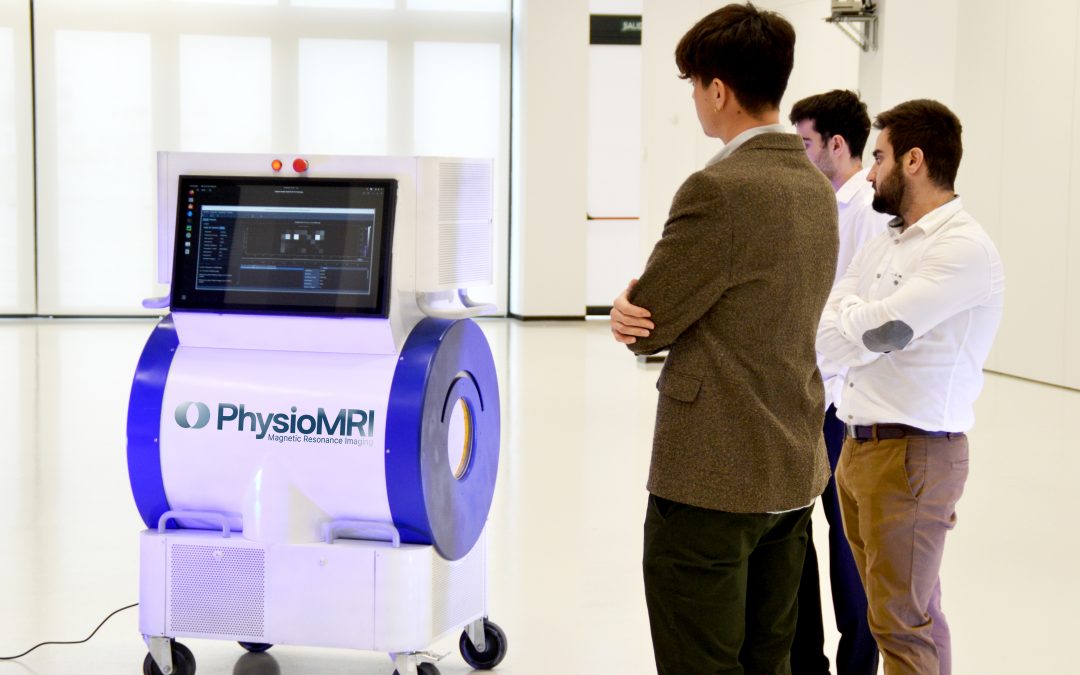
The machine developed by the company makes it possible to reduce the costs of MRIs
The great potential of the Valencian startup PhysioMRI makes it a serious contender to become one of the unicorns on which the global investment sector can cast its gaze. “A fact as revolutionary as the possibility of democratizing health by reducing the costs of diagnostics through magnetic resonance imaging has been striking enough to attract attention in the sector,” the company said in a statement.
The tests carried out in recent weeks show that it can be diagnosed for a price 30 times lower than the current price and the endorsement of the Higher Council for Scientific Research (CSIC) gives it that aura of a great unicorn. The first of the machines has already been manufactured and tested on humans, so it will soon be presented at the Valencia facilities.
In the meetings that we are having with investors or in the exhibition that we hold of PhysioMRI, everyone gives us a feeling that we are facing something big, revolutionary and that no one wants to miss, the next unicorn that wants to compete with the Nasdaq companies and that It is also based in Valencia,” explained Alfonso Ríos, founder of PhysioMRI.
“The latest tests carried out make us even more optimistic and see the future with the great milestone that PhysioMRI poses, that of becoming the company that revolutionizes the health sector in its diagnostic field worldwide,” he added.
Ríos heads a team of science and technology professionals in which he contributes his experience in the field of managing successful technology companies. Also as the visible face of this project are the director of the I3M, Professor José María Benlloch, or Joseba Alonso, a doctor in atomic physics with extensive experience in research projects worldwide.
Likewise, within the investment support there are leaders from the world of sports who know first-hand the applications of an MRI machine and its importance for the health of the athlete and people in general. Among them, the Olympic champion with Argentina, Luis Scola, or the silver medalist with Spain in the Olympic Games, Fernando San Emeterio, stand out.
BACK TO NEWS
(more…)
by Editorial Team | Feb 28, 2024 | General News
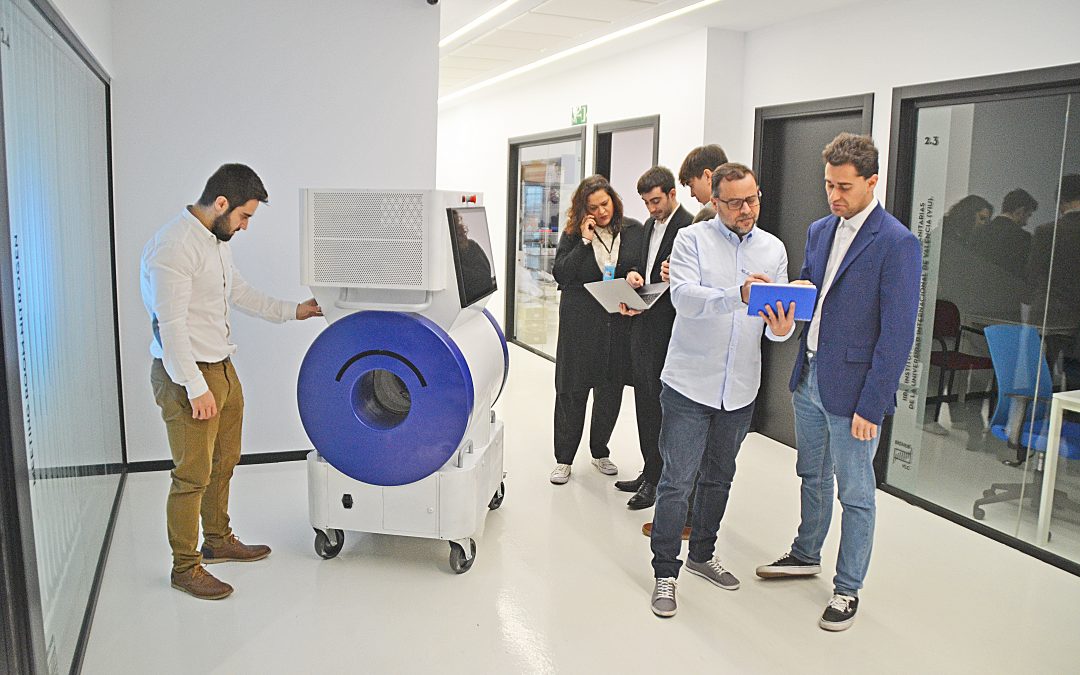
The scanner is the first that can be used in racing circuit hospitals, where they have X-ray equipment, but not magnetic resonance imaging.
Last September, a research group from the Institute of Instrumentation for Molecular Imaging (i3M), a joint center of the Higher Council for Scientific Research (CSIC) and the Polytechnic University of Valencia (UPV), presented the first portable magnetic resonance machine on the market, developed together with the spin-off PhysioMRI Tech . It is a low-cost, low-consumption device, spending half as much as a microwave oven, which allows images of arms and legs to be taken in a very short time and with high diagnostic quality.
Two months after its presentation, the portable MRI device will be used during the Valencian Community GP of motorcycling, which will be held starting tomorrow, Saturday and Sunday at the Ricardo Tormo circuit in Cheste .
The machine has been installed in the main operating room of the circuit’s Medical Services room, under the supervision of Dr. Vicente Vila, chief medical officer of the Circuit, and Dr. Ángel Charte, MotoGP medical director. During the competition weekend, it will be available to the fastest pilots on the planet to, if needed, offer a quick and effective diagnosis, proving to be a tool that can radically change trauma diagnoses, the most frequent in the world. of sport.
In the words of Joseba Alonso, CSIC researcher who leads the project, “this is a key step in the evaluation of the versatility of this technology, since in this way it will be possible to quantify the impact it can have on a first-class sporting event.” level”.
“In these first tests, we hope that our system can be used to complement the clinical diagnosis of the Circuit’s medical team, allowing the taking of images of drivers, family members, engineers and team personnel, Circuit and organization workers, marshals. track, etc. Our scanner is the first that can be used in hospitals on racing circuits, where there is usually some X-ray device, but never magnetic resonance imaging,” Alonso highlights. “X-rays offer two-dimensional projections in which hard tissues, such as bones or tendons, stand out. On the contrary, MRI generates three-dimensional reconstructions in which soft tissues, such as muscles and organs, are also visualized.”
“At PhysioMRI Tech we are excited that the first major sporting event using our machine will be the MotoGP Grand Prix, a world-class sporting event,” says Jon Fatelevich, co-founder of the company.
About portable MRI
The device developed at the Valencian research center drastically reduces the cost of magnetic resonance imaging devices, going from one million euros to around 50,000. In addition, it is much lighter, only 250 kilos compared to thousands of current devices. Cost and weight are reduced when going from a superconducting magnet, like those used in large particle physics experiments, to one based on an array of about 5,000 small permanent magnets like those found in refrigerators. “The counterpart is that this lowers the intensity of the magnetic field, and, therefore, the maximum resolution of the image,” Alonso acknowledges. “However, there are many applications where all the resolution provided by very expensive hospital machines is not necessary, and at the same time it opens up a whole new range of possibilities.”
Reducing the magnetic field allows the system developed by i3M to be compatible with situations in which magnetic resonance imaging was automatically ruled out, such as use in the operating room or in the case of patients with pacemakers or tattoos.
In addition, lowering the weight of the device allows the system to be mounted on a cart and have a portable scanner. “Its portability has allowed it to travel comfortably to the circuit, proving itself as a tool that can become another passenger in the great motorcycling circus or any other event with similar characteristics such as the Tour de France or the Formula 1 World Championship.” , highlights Joseba Alonso. In addition, it could also be used in patients’ homes, residences for the elderly or people with reduced mobility, outpatient clinics and small clinics, intensive care areas, emergencies, operating rooms and medical vehicles or field hospitals.
BACK TO NEWS
(more…)

by Editorial Team | Feb 27, 2024 | General News
Medical Innovation: A Step Forward in Imaging Technology to Improve Access to Healthcare Worldwide PhysioMRI, a leader in MRI technology, is pleased to announce that it has been selected to receive funding from the European Union’s Eurostar program . in collaboration with the German company Barthel HFTechnik GmbH. This partnership aims to develop a lightweight, robust and easily transportable magnetic resonance imaging (MRI) scanner, specifically designed to operate in extreme and difficult to access environments, such as field hospitals, conflict or disaster zones, and rural and remote areas where Conventional MRI scanners are not feasible.
This new MRI scanner will have the ability to provide accurate and timely diagnoses in critical situations, significantly improving healthcare in areas where access to advanced diagnostic technology is limited. Both companies will contribute their experience and technical resources to advance in this field, taking advantage of synergies and promoting the exchange of knowledge between multidisciplinary teams.
“We are excited to partner with Barthel Barthel HF-Technik GmbH on this project that has the potential to revolutionize healthcare in challenging environments,” said Alfonso Ríos Alonso, PhysioMRI company manager.
“Our goal is to develop an MRI scanner that is not only lightweight and transportable, but also highly reliable and accurate, so that it can provide quality medical care anywhere in the world. The alliance between PhysioMRI and Barthel GmbH represents a unique opportunity to promote innovation and strengthen the position of both companies in the international medical technology market.
The results of this project are expected to contribute to the development of more precise and effective medical solutions to improve the quality of life of patients around the world. This project will have applications in a wide range of medical areas, from neuroimaging to musculoskeletal conditions in the extremities. Its robust design and ability to operate in extreme conditions will make it an invaluable tool for doctors and healthcare professionals working in difficult environments.
VOLVER A NOTICIAS
(more…)
