ELLIMRI: The PhysioMRI Portable Magnetic Resonance Revolution

ELLIMRI: The PhysioMRI Portable Magnetic Resonance Revolution

PhysioMRI transforms medical diagnostics with its innovative portable MRI. A revolutionary breakthrough in the accessibility and accuracy of clinical studies.


Today’s technology is advancing rapidly, and within modern medicine magnetic resonance imaging (MRI) remains an essential diagnostic tool. However, despite its great importance, traditional MRI faces some challenges, such as the need for large facilities or high costs. Faced with these obstacles, PhysioMRI, a leading Spanish company in innovation and technological development, has initiated a revolutionary project that promises to transform the field of healthcare: ELLIMRI, a new portable MRI system.

ELLIMRI Project at a Glance

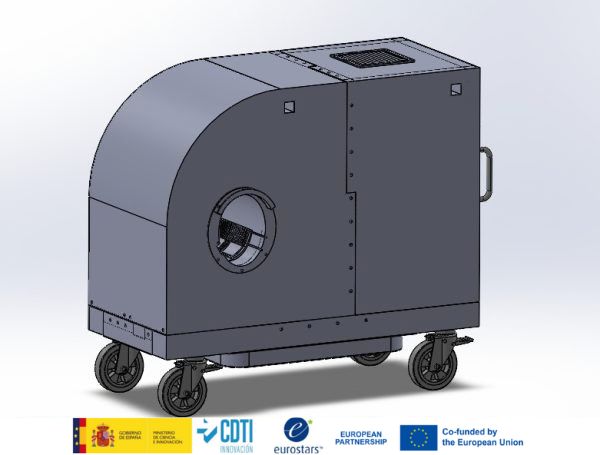
ELLIMRI is the new project being developed by PhysioMRI, and is designed to offer a portable and accessible alternative to traditional MRI systems. This device aims to democratise access to MRI, allowing high-quality scans to be performed anywhere and in a much more affordable way.

PhysioMRI is committed to overcoming the limitations that current technology presents by creating an MRI device that is portable, efficient, easy to use and maintains high quality results. With ELLIMRI, the vision is to make MRI examinations more accessible not only for large hospitals and clinics, but also for small medical centres, rural areas and even in emergency situations.

Key features of ELLIMRI

  1. Portability without Compromise

ELLIMRI is intended to be easy to transport and use in different environments, such as mobile clinics, field hospitals, doctors’ surgeries and rural areas.

  1. State-of-the-art technology

Despite its compact size, ELLIMRI does not sacrifice image quality, thanks to the implementation of advanced processing algorithms and the miniaturisation of MRI technologies.

  1. Ease of Use

ELLIMRI has been designed with convenience and accessibility in mind. Its intuitive interface allows physicians and healthcare technicians to operate the equipment with ease. In addition, the device features automated functions that simplify the image capture process, reducing potential human error and optimising diagnostic time.

  1. Affordability

One of the biggest challenges of traditional MRI is the high cost of acquisition and maintenance. ELLIMRI, thanks to its modular design and less reliance on large facilities, significantly reduces costs, making MRI more accessible to a wider range of healthcare institutions.

Impact on the Global Health System

The ELLIMRI project has the potential to revolutionise medical care in places where MRI is currently inaccessible. This is particularly important in rural regions or developing countries, where resources to purchase state-of-the-art medical equipment are limited.

In addition, ELLIMRI can have a crucial impact in emergency situations, where medical facilities may be overburdened.

A Promising Future

With the development of this device, PhysioMRI reaffirms its commitment to technological innovation and the continuous improvement of medical care. ELLIMRI is not only a technological breakthrough, but a step towards democratising access to quality healthcare. With its innovative design and its ability to make MRI more accessible and affordable, this PhysioMRI project is destined to make a difference in the healthcare sector.

The future of MRI is portable, accessible and more efficient than ever.


PhysioMRI and the NextMRI Project: The New Generation of Portable Magnetic Resonance Imaging

PhysioMRI and the NextMRI Project: The New Generation of Portable Magnetic Resonance Imaging

The NextMRI project heralds a new era of mobile and accessible diagnostics


PhysioMRI is a Spanish company pioneering the development of portable low-field magnetic resonance imaging (MRI) systems, and one of its most ambitious projects is NextMRI. This project represents a qualitative leap in medical imaging technology, combining portability, energy efficiency and powerful software to achieve an accessible, high-quality diagnostic solution.

Start of the project
NextMRI has its origins in previous work carried out by the Institute of Instrumentation for Molecular Imaging (i3M), a joint centre run by the Polytechnic University of Valencia (UPV) and the Spanish National Research Council (CSIC). Thanks to several patents developed by i3M and the involvement of its spin-off PhysioMRI Tech SL, magnetic resonance images had already been obtained in non-clinical settings: offices, outdoors, and even homes.

In October 2023, the project was formalised under a grant agreement with the European Innovation Council (EIC). It will run from 1 October 2023 to 30 September 2026.

Funding
The total budget for the NextMRI project is fully funded by the European Union through the EIC. PhysioMRI Tech SL participates as one of the beneficiaries of the consortium, alongside the CSIC, La Fe Hospital (IIS La Fe) and other clinical and technological partners (Bergman Clinics or Leiden University Medical Center), including international institutions.

The funding objectives are ambitious: to expand the technology to acquire images of extremities (such as knees or hands), integrate machine learning algorithms to improve image reconstruction, optimise device portability, reduce production costs, conduct clinical trials, and lay the foundations for a sustainable business model.

NextMRI project website
The project has its own official website, with the domain nextmri.eu. On this page, you can find detailed information about the scientific background, objectives, methodology, participating consortium, and the different phases of the project.

At the same time, PhysioMRI maintains its institutional website at physiomri.com, where it describes its developments in portable magnetic resonance imaging (such as its low-field scanner), its mission — to ‘democratise magnetic resonance imaging’ with accessible equipment that is not tied to traditional hospital infrastructure — and its recent advances. Its blog features posts about NextMRI, explaining how the innovative software improves image quality even when the magnetic field is lower, and how the equipment is designed to be compact, ergonomic, and mobile.

Conclusion
NextMRI is a transformative initiative: by combining PhysioMRI’s expertise in portable magnetic resonance imaging with European funding, and incorporating state-of-the-art software to improve image quality, the project aims to take magnetic resonance imaging beyond large hospitals. Its website offers a clear window into the state of development, clinical objectives and collaborators, and its ambitious business plan could mark a turning point in access to diagnostic imaging.


The portable MRI that will change sports medicine receives the backing of 3 basketball legends, Scola, Claver and San Emeterio

The portable MRI that will change sports medicine receives the backing of 3 basketball legends, Scola, Claver and San Emeterio

 PhysioMRI, in certification phase, to offer its portable MRI with a pay-per-use model that democratizes access to this technology


The device, endorsed by NBA and Spanish National Team stars, improves diagnosis, prevention and recovery from injuries without irradiation.


Basketball stars Víctor Claver, Luis Scola and Fernando San Emeterio have decided to bet on the future of sports medicine with their investment in PhysioMRI, the Spanish company that is revolutionizing diagnostic imaging with its low-field portable MRI.


Magnetic resonance imaging (MRI) is one of the most accurate tools in medicine, but its high cost and the need for large facilities limit its accessibility. PhysioMRI seeks to change this reality with an innovative, accessible, radiation-free device that enables diagnoses in any environment, from hospitals to sports clinics and rural areas.


The device, which has already been tested on more than 160 patients at the Hospital La Fe in Valencia, is in the certification phase and is expected to be marketed in the second half of the year. In addition, its pay-per-use model will allow more clinics to access this technology without making large investments.


Jon Fatelevich, co-founder and head of investments at PhysioMRI, highlights the importance of the support received:


“For our company, it is a source of pride and great validation to have the endorsement of three world-renowned figures in sports. This demonstrates that our medical device brings real value and solves a problem that athletes and professionals in the industry clearly see. Our technology not only detects injuries once they have occurred, but could also be used in prevention and recovery. By not emitting radiation, we can perform multiple tests before, during and after an injury without risk to patients.”


PhysioMRI resonance imaging offers key advantages:


Greater accessibility: Quality diagnostics at a lower cost than traditional tests.

Medical care anywhere: Ideal for hospitals, clinics, sports centers and remote areas.

Optimization of diagnosis: Use of artificial intelligence to accelerate the interpretation of results.

Reduced impact on the healthcare system: reduced costs and greater efficiency in medical care.


The support of key investors such as Víctor Claver, Luis Scola and Fernando San Emeterio reinforces the commitment to this innovation that promises to transform sports medicine and diagnostic imaging worldwide.


With certification underway and commercialization expected this year, PhysioMRI is emerging as one of the most disruptive medical solutions of the moment, bringing MRI to where it was previously unthinkable.


PhysioMRI Obtains ISO 9001:2015 Certification, Ensuring Excellence in Quality Processes

PhysioMRI Obtains ISO 9001:2015 Certification, Ensuring Excellence in Quality Processes

A milestone in quality and excellence that reaffirms the company’s commitment to innovation and continuous improvement in the healthcare sector.


PhysioMRI, a leading innovator and developer in the field of medical technology, is proud to announce that it has achieved ISO 9001:2015 certification. This achievement reaffirms the company’s commitment to quality, continuous improvement and customer satisfaction in the development of advanced medical solutions, including its portable MRI technology.

About PhysioMRI

PhysioMRI is a company dedicated to innovation in medical technologies, specialized in the development of low-field magnetic resonance imaging. The Spanish company’s medical device represents a groundbreaking innovation that redefines the way we think about MRI.  The low-field device, with its compact and versatile design, makes it possible to bring high-quality diagnostic technology to patients who, for various reasons, cannot access conventional equipment. This technology has the potential to change the healthcare landscape, enabling faster and more accurate diagnoses in locations far from traditional medical centers.

 What does ISO 9001:2015 certification consist of?

ISO 9001:2015 certification is an internationally recognized standard that establishes the requirements for a quality management system in organizations. The company’s achievement of this certification is an important milestone, as it accredits that all PhysioMRI processes meet the highest quality standards.

The certification process involved an exhaustive review of all aspects, such as top management commitment, internal audit or design and manufacture of the portable MRI, among others, thus ensuring that the strict quality requirements established by the ISO 9001:2015 standard were met.

 PhysioMRI magnetic resonance imaging: state-of-the-art in the service of the medicine of the future

With a focus on innovation and continuous improvement, the Valencian startup seeks to make accessible the best tools for patient care, with products that optimize diagnostic and treatment processes in the medical imaging sector.


PhysioMRI Drives Revolution in Portable Magnetic Resonance Imaging with Artificial Intelligence

PhysioMRI Drives Revolution in Portable Magnetic Resonance Imaging with Artificial Intelligence

The Spanish manufacturer of low-field MRI machines improves image quality, reduces study times and democratizes access to advanced diagnostics.

The commercialization of PhysioMRI will facilitate access to MRI with an innovative approach, using a hybrid between Tesla’s stock model and the model of the photocopier companies of 20 years ago.


Valencia, Spain, January 2025 – PhysioMRI, a leader in medical technology innovation, takes another step into the future of healthcare with the incorporation of artificial intelligence (AI) into its revolutionary portable MRI device. This breakthrough not only redefines image quality, but also significantly reduces study times, consolidating its position as a pioneer in the industry.

MRI, traditionally associated with expensive and bulky equipment, is now within the reach of more professionals thanks to the PhysioMRI solution. Its device, unique in the world for being truly portable and 90% cheaper than current models, now adds a powerful AI layer that optimizes every stage of the diagnostic process.

Artificial Intelligence: The Key to Change

The integration of AI into the PhysioMRI system enables real-time image processing and enhancement. This ensures higher resolution, even in resource-constrained environments, facilitating more accurate and accessible diagnoses. In addition, AI minimizes artifacts and noise in the images, common problems in traditional systems, providing a clearer visualization of the internal structures of the human body.

Another revolutionary aspect is the drastic reduction of study times. Advanced algorithms optimize image acquisition, enabling results in record time. This not only improves the patient experience, but also increases the operational efficiency of clinics and hospitals, expanding their capacity for care.

Universal Access: Democratization of Magnetic Resonance Imaging

PhysioMRI technology has the potential to radically transform access to MRI. Thousands, or even hundreds of thousands, of healthcare facilities such as physiotherapy clinics, medical centers and small clinics will be able to access this advanced medical imaging technology, which until now was reserved only for large hospitals capable of investing millions of euros in these devices.

According to Jon Fatelevich, co-founder and CSO of the company:

“With PhysioMRI, this will change forever. Thanks to the drastic cost reduction and high quality we have achieved, we want to break this economic barrier by offering our machines under a pay-per-use model, similar to the photocopier model we had in Spain 20 years ago. Thus, interested entities will not have to buy them, but pay only for what they use, truly democratizing access to the best medical imaging technology in the world.”

In addition, Fatelevich noted that interested parties will be able to reserve the machines directly through the PhysioMRI website, emulating Tesla’s innovative style. This disruptive strategy opens the door for more healthcare professionals and centers to benefit from this cutting-edge technology without making large upfront investments.

Marketing: The Future Is Here

PhysioMRI is already working on commercializing this innovative technology. According to Fatelevich:

“We will start pre-sales during the first half of 2025, with the first deliveries scheduled for late 2025 and early 2026, after obtaining CE certification on which we are already well advanced.”

Global Impact: Democratization of Diagnosis

The portable PhysioMRI device not only reduces costs and improves accessibility, but also lays the groundwork for a future where artificial intelligence will be an essential tool in healthcare. This technology is specially designed to bring advanced diagnostics to locations with limited infrastructure, thus democratizing access to world-class medical tools.

With this innovation, PhysioMRI reinforces its mission to make medical technology more efficient, accessible and accurate, ushering in a new era in diagnostic imaging.